If you’ve ever stood at a fuel terminal or a remote gas storage yard and watched an LPG tanker trailer roll by, you might not have given much thought to the networks of wires, sensors, and safety systems tucked inside its frame. As a supplier that’s designed, built, and maintained these rigs for more than a decade, I can tell you that the electrical systems on an LPG tanker aren’t just afterthoughts—they’re the backbone of every safe, on-time delivery. LPG, or liquefied petroleum gas, is a highly flammable, pressurized hydrocarbon, so every part of the trailer’s electrical setup is engineered to prevent sparks, monitor hazards, and comply with strict global safety standards. Today, I’m pulling back the curtain to break down exactly what those systems do, why they matter, and how our team designs them to keep drivers, bystanders, and cargo safe. LPG Tanker Trailer
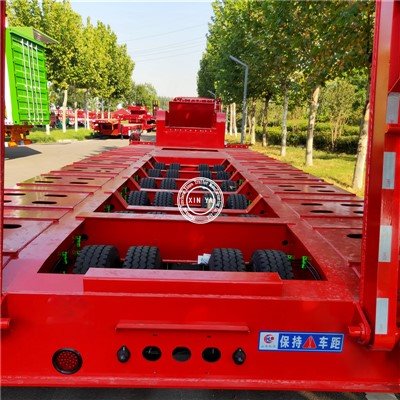
Let’s start with the basics: LPG trailers don’t run on electricity themselves—that’s handled by the tractor unit. Instead, the trailer’s electrical system is a dedicated, isolated network built exclusively to serve its specialized cargo and safety needs. Unlike a standard box trailer, an LPG tanker’s electricals have to withstand extreme conditions: cold weather for propane, high pressure for butane, and the rough vibration of 80,000-pound loads bouncing down highways. That’s why every component is rated for Class I, Division 1 hazardous locations—the designation for areas where flammable gases could be present. No random, uncertified parts here; every switch, sensor, and wiring harness is tested to avoid igniting LPG vapor.
First up is the core power distribution system. Most LPG trailers draw power from a 12-volt DC system, with a deep-cycle battery mounted in a sealed, explosion-proof compartment near the trailer’s front (close to the tractor’s electrical connection). We size batteries based on the trailer’s equipment load—for a standard 3-compartment tanker, that’s usually a 100Ah unit, enough to run sensors, valves, and lights for 24+ hours if the tractor disconnects unexpectedly. The wiring itself isn’t your average automotive wire, either. We use Teflon-insulated, copper-core cables rated for 175°C (347°F) heat, crimped with corrosion-resistant tin-plated terminals to prevent sparking from loose connections. All wiring is sheathed in a rigid, UV-resistant conduit that runs along the trailer’s frame, away from hot exhaust pipes and sharp edges that could fray insulation over time. We also add circuit breakers instead of fuses to handle temporary power spikes from pressure sensors or motorized valves—they reset automatically after a fault, so a small hiccup doesn’t leave a trailer stranded mid-route.
Next, the heart of the system: cargo monitoring and safety controls. An LPG tanker’s tanks are pressurized, so overfilling or overpressure is the single biggest risk during loading and transport. That’s where the mass load monitoring system comes in, a network of sensors that track every aspect of the cargo in real time. Our trailers use load cells mounted under each tank’s supporting frame, paired with level sensors that measure LPG volume and pressure. All data feeds to a compact dashboard display in the driver’s cab, so when a driver is loading, they can see exactly how much LPG is going into each compartment without guessing. But the safety layer goes beyond just monitoring: we integrate overfill prevention devices (OFDs) that trigger an automatic shutoff to the loading pump if the tank reaches 90% capacity. This is non-negotiable—regulatory bodies like FMCSA and UN ECE require OFDs on all LPG tankers built after 2010, and we design ours to fail-safe: if power cuts out, the valve snaps shut to prevent spills.
Pressure monitoring is another critical piece. LPG turns from liquid to gas at low pressure, so even a small leak can release flammable vapor that’s invisible but explosive. We mount two pressure sensors on each tank: one for the vapor space (to detect leaks) and one for the liquid space (to ensure the tank isn’t under too much pressure during transport). If pressure exceeds a set threshold (usually 250 psi for propane, 150 psi for butane), a high-pressure alarm goes off in the cab and triggers a small vent valve to release excess pressure safely. We also add temperature sensors to track ambient and cargo temperature—extreme heat can make LPG expand, so if a trailer is sitting in 100°F weather, the system alerts the driver to slow down, avoid idling, or find a shaded spot if needed.
Then there are the safety systems that protect everyone on site during loading and unloading. The electrical system includes a ground fault monitoring system (GFMS) that connects the trailer to the loading rack’s ground. LPG is static-prone, so a trailer that isn’t properly grounded can build up a static charge that sparks. Our GFMS checks the ground connection 10 times per second—if it detects a break, it cuts power to all non-essential systems (like the valve motor) and sounds an alarm. That’s a lifesaver; we’ve had clients tell us this system prevented a potential spark during a loading operation where a ground cable snagged on a curb.
For drivers, the trailer’s electrical system also includes lighting and visibility features, but again, tailored for hazardous environments. Standard tail lights and brake lights are certified for hazardous locations, with sealed lenses that don’t allow vapor to seep in and ignite. We also add marker lights along the tanker’s sides for low-visibility routes, and LED work lights on the rear for loading operations after dark. A key feature most new clients request is a trailer tracking system (TMS) integrated into the electrical network. The TMS links to GPS, so fleet managers can track the trailer’s location, monitor cargo levels remotely, and set up geofences to alert if a trailer strays into an unauthorized area. We build these to be tamper-proof—no driver can disconnect the TMS without tripping an alarm, which is a big concern for high-value LPG cargo.
Wait, what about valves? I haven’t talked about the motorized valves that control the flow of LPG, which are a huge part of the electrical system. Most LPG tankers have separate valves for each compartment, and instead of manual levers, we use electric actuators that open and close the valves at the push of a button in the cab. Each actuator is explosion-proof, with a sealed motor that can’t ignite vapor, and it has a feedback sensor that confirms when the valve is fully open or closed. That eliminates human error—no driver will accidentally leave a valve open during transport, which would cause a leak. We also add a manual override, just in case the power goes out mid-route, so drivers can still operate valves with a hand crank.
Now, let’s talk about common misconceptions. A lot of new customers think the entire trailer’s electrical system is just a copy of a semi-truck’s, but that’s a mistake. Last year, we had a client who bought a cheap, uncertified LPG trailer from a non-specialized supplier; during a routine inspection, regulators found that the wiring wasn’t rated for hazardous locations, and the pressure sensors were uncalibrated. They had to pull the trailer off the road at a cost of $10,000 in lost revenue and repairs. That’s why our team insists on testing every trailer’s electrical system before it leaves our yard: we run a 24-hour load test to check for voltage drops, simulate overpressure events to make sure alarms trigger, and do a vapor leak test with a combustible gas detector to confirm no electrical component is creating a spark.
We also update our electrical systems every 2 to 3 years to align with new safety regulations. For example, in 2021, FMCSA mandated that all LPG trailers added a wireless emergency alarm that sends a text to the fleet manager if pressure exceeds safe limits. We adapted our existing TMS to add that feature, so clients didn’t have to rewire their entire trailers—just a small software update. That’s the value of working with a specialized supplier: we don’t just build trailers, we stay on top of rules and adjust systems to keep our clients compliant and safe.
Let me wrap this up. The electrical systems of an LPG tanker trailer aren’t just a way to power lights and sensors—they’re a layered network designed to prevent the worst-case scenarios: leaks, overpressure, static sparks, and human error. Every component, from the battery compartment to the smallest sensor, is built with the cargo’s unique hazards in mind. If you’re in the market for an LPG tanker trailer, whether you’re a small local gas delivery company or a large fleet serving cross-country routes, working with a supplier that understands the ins and outs of these electrical systems is non-negotiable. We’ve built hundreds of these rigs, refined our electrical design over years of on-road testing, and stand behind every system we install.

If you’d like to learn more about our LPG tanker trailers, get a custom quote, or discuss how we can tailor electrical systems to your specific needs, don’t hesitate to reach out. We’re here to walk you through every detail, answer questions, and make sure you get a trailer that’s safe, compliant, and built for your operations.
Lowbed Semi Trailer References
- Federal Motor Carrier Safety Administration (FMCSA). (2021). Hazardous Materials Regulations: LPG Tanker Trailer Safety Standards.
- United Nations Economic Commission for Europe (UNECE). (2019). Technical Regulations for Road Tankers Carrying Flammable Gases.
- National Fire Protection Association (NFPA). (2020). NFPA 58: Liquefied Petroleum Gas Code.
Shandong Yuncheng Xinya Trailer Manufacturing Co., Ltd.
Shandong Yuncheng Xinya Trailer Manufacturing Co., Ltd. is one of the most experienced LPG tanker trailer manufacturers and suppliers in China, featured by quality products and good service. Please rest assured to buy CE approved LPG tanker trailer from our factory. Contact us for customized service and OEM service.
Address: No. 008, Hexie Road, Yangzhuangji Town, Yuncheng County, Heze City, Shandong Province
E-mail: fiona@xinyatrailer.com
WebSite: https://www.china-truckfactory.com/
