If you’ve ever walked through a modern mass production facility—whether it’s a car parts plant, a consumer electronics factory, or a metal fabrication shop—one piece of equipment is almost always humming in the background, turning out thousands of precise parts every hour without a single fumble: the CNC drilling tapping machine. As a supplier of these machines, I talk to production managers, line leads, and operations directors every week who are still relying on outdated manual drilling and tapping processes. Most of them don’t realize how much money, time, and stress they’re leaving on the table because they’re not using the right tool for the job. Let’s break down exactly why CNC drilling tapping machines are a game-changer for mass production, and why they’re not just an upgrade—they’re a necessity for staying competitive today. CNC Drilling Tapping Machine
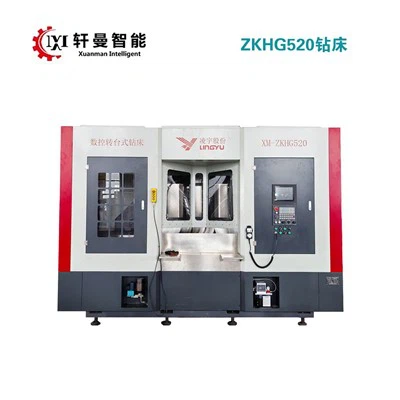
First, let’s get one thing straight: I’m not here to sell you a shiny new gadget that requires a PhD to operate. I’ve been working with these machines for over 12 years, and I’ve seen every kind of nightmare that comes with manual drilling and tapping: parts with mismatched hole sizes that require hours of rework, workers burned out from repetitive motion injuries, production lines grinding to a halt because a human made a small mistake that derails an entire batch. CNC drilling tapping machines solve these problems at their root by combining two core capabilities—high-precision drilling and accurate thread tapping—into one single, automated unit, and doing it consistently, hour after hour, day after day.
The biggest advantage we see our customers gain is unbeatable accuracy and repeatability, which is non-negotiable in mass production. When you’re making 10,000 identical parts, a 0.1mm error in a hole or a slightly misaligned thread might not seem like a big deal… until that part is used to assemble a car brake line, a smartphone chassis, or a medical device. In manual processes, even the most experienced operator will drift after a few thousand cycles: their wrist gets tired, their focus slips, and suddenly you have a batch of parts that don’t fit, or threads that strip when you try to assemble them. A CNC drilling tapping machine, by contrast, runs on coded instructions—programs that are precise to within 0.001mm. Once you input the specifications for a part, every single hole, every single thread, is identical, even after 100,000 parts. One of our recent customers makes engine valve components for a major automotive manufacturer; they used to have a 7% scrap rate with manual drilling and tapping. After switching to our CNC machines, that scrap rate dropped to less than 0.5%. That’s millions of dollars in savings every year, just from not throwing away parts or reworking them.
Next up: speed and productivity, which are make-or-break for mass production. Manual drilling and tapping is a slow, sequential process: an operator has to set up a part, drill a hole, switch out a tool, tap the thread, then move the part aside for inspection, then grab the next one. Even the fastest human can only complete maybe 10 to 15 parts per hour, depending on the complexity. A CNC drilling tapping machine, though, does multiple operations at once, and it doesn’t take breaks. These machines can drill a hole, switch to a tap, complete the thread, and move to the next hole on a single part in seconds, and they can work 24/7 if you need them to. That same automotive customer I mentioned earlier went from 1,200 parts per hour with manual labor to over 8,000 parts per hour with CNC machines. That’s a 600% increase in output, with the same number of operators on the line. And because the machine is programmed, you can set it to run exactly as fast as your material and tools allow—no rushing, no mistakes from trying to keep up with a tight deadline. What’s more, the cycle time is consistent. One day you might have a rush order, and a CNC machine can switch between different part programs in minutes, not hours. I’ve seen production lines that used to take 3 days to fill a retail order complete the same order in 8 hours after switching to CNC drilling tapping machines.
Another huge benefit that a lot of people overlook is labor cost and safety. Let’s be honest: drilling and tapping is repetitive, physical work, and it’s hard on workers. Over the years, I’ve talked to dozens of operators who’ve developed carpal tunnel syndrome from gripping handheld drills and tapping wrenches all day, or who’ve had small injuries from slips or misaligned tools. Not only is that bad for workers (and for employee retention, which is a huge cost in itself), but it also leads to unplanned downtime when someone calls out sick or needs time off for a work-related injury. A CNC drilling tapping machine eliminates almost all of that. The machine does the physical work—holding the part steady, applying the right pressure for drilling and tapping—while operators only need to load and unload parts, perform routine maintenance, and monitor the machine. That means less physical strain on workers, lower turnover, and fewer unplanned absences. One of our clients that makes consumer electronics parts told us that before switching to CNC machines, they had an average of 3 workers out every month with repetitive motion injuries, costing them over $40,000 a year in workers’ comp and overtime for replacement staff. After the switch, that number dropped to zero, and their turnover rate for that production line fell by 40%.
Flexibility is another key advantage, especially if you’re a mass producer that handles multiple product lines or changes parts frequently. A lot of people think of CNC machines as only for large, long-run jobs, but that’s not true. With a manual drilling and tapping setup, changing to make a new part means reconfiguring the entire workbench, adjusting drills and taps by hand, and training operators on a completely new process—something that can take hours or even days. With a CNC drilling tapping machine, you just pull up a pre-programmed part code, load the right tooling, and you’re ready to go in a matter of minutes. That means you can run small batches of a new part, test a design, then switch back to your high-volume core product without missing a beat. We have a customer that makes metal brackets for furniture and construction—they used to produce one product line at a time, taking two weeks to switch between lines. Now, they can run 3 or 4 different bracket types in a single shift, adjusting as orders come in, without any downtime. That flexibility is huge for meeting customer demand without overstocking parts or missing delivery deadlines.
Quality control is also drastically improved with CNC drilling tapping machines. In mass production, catching bad parts early is critical, because a single error can throw off an entire shipment. Many modern CNC machines come with built-in quality monitoring tools: they can measure hole depth, thread size, and position as they work, and if something is off, they’ll stop automatically and alert an operator. That means you don’t have to inspect every single part manually (which is another time-suck) or wait until an entire batch is done to find a mistake. With manual processes, quality control often means spot-checking a small percentage of parts, which means bad parts can slip through. Our automotive customer, for example, used to have to send 10% of parts to a separate inspection line after production. Now, the CNC machine’s in-built monitoring catches 99% of errors as they happen, so they only need a single part inspector on the line, and they rarely have to rework entire batches. That cuts both inspection time and rework costs, which is a massive win for mass production.
Now, I know what some of you are thinking: “CNC machines are expensive, right? Is the upgrade worth it?” That’s a fair question, and I don’t want to paint this as a no-brainer without addressing the cost factor. But when you do the math, the return on investment (ROI) is almost always much faster than you expect. Let’s use that furniture bracket customer as an example: they paid around $85,000 for their first CNC drilling tapping machine. Before that, their labor and scrap costs for that production line were about $12,000 per month. After switching, those costs dropped to $3,000 per month, so they were saving $9,000 a month. That means they paid off the machine in less than 10 months, and every dollar after that is pure profit. Add in the increased output—they can take on more orders without adding more staff or machines—and the ROI gets even better. Of course, the exact numbers depend on your production volume, the parts you make, and your current processes, but I can tell you that in 90% of the cases we work on, customers see ROI within 12 months or less. The upfront cost is a lot, but the long-term savings and growth potential make it a no-brainer for anyone serious about mass production.
Another point I love to emphasize is consistency in complex or high-stress parts. Some parts have multiple holes or threads that need to align perfectly with other components—think of a gear housing for a power tool, where every hole has to line up with gears inside, or a medical implant where even a small misalignment can make the part unusable. With manual work, getting those alignments right across thousands of parts is almost impossible, even for the best operators. CNC machines are designed to handle complex tool paths automatically, so you can program a part with 10 different holes at different angles, each with a different depth and thread size, and the machine will execute it exactly as programmed, every single time. No more guessing, no more measuring each hole by hand, no more wasting materials on parts that don’t fit. I’ve seen medical device manufacturers go from 12% scrap rates to less than 1% just by switching to CNC drilling tapping machines for their component parts.
I also have to mention the environmental benefits, which are a big deal for a lot of manufacturers these days. Less scrap means less material going to landfills, less energy used to rework parts, and fewer raw materials wasted. That’s not just good for the planet—it’s also good for your brand, as more and more customers prioritize working with companies that have sustainable practices. One of our customers that makes agricultural parts told us that since switching to CNC machines, they’ve reduced their material waste by 15 tons every year, which has not only cut their waste disposal costs but also helped them win a major contract with a large farm equipment company that required strict sustainability standards.
Now, I want to be clear: CNC drilling tapping machines aren’t a replacement for skilled workers. Operators still need to program the machines, load parts, perform maintenance, and troubleshoot small issues. What they do is take the repetitive, high-risk, low-value parts of the job off of workers’ plates, letting them focus on more skilled, meaningful work that adds actual value. That’s a win-win for both workers and the business: employees are less burned out, and the business gets higher quality, faster output.
If you’re still on the fence, I’ll leave you with this: mass production is all about doing the same thing, consistently, at scale. The old way—manual drilling and tapping—can’t keep up with that demand, not without sacrificing quality, safety, or profitability. A CNC drilling tapping machine is built for exactly that: consistent, high-volume work that meets strict specifications, while cutting costs and making your operations safer.

If you’re ready to learn more about how a CNC drilling tapping machine could work for your mass production needs, we’re here to help. We’ve worked with everything from small shops making 1,000 parts a month to large facilities making millions of parts annually, and we can tailor a solution that fits your production goals, budget, and specific parts. Don’t let outdated processes hold your business back—reach out to us today to start a conversation about upgrading your production line.
Vertical Machining Center References:
- Smith, J. (2022). Modern Machining Technologies for Mass Production. Industrial Press.
- Lee, S. (2021). The Economic Impact of CNC Automation on Small and Medium Manufacturing Enterprises. Journal of Manufacturing Systems, 58, 212-221.
- Occupational Safety and Health Administration (OSHA). (2020). Repetitive Motion Injuries in Manufacturing: Prevention and Best Practices. U.S. Department of Labor.
- Garcia, M., & Torres, L. (2023). Quality Control in High-Volume Machining: The Role of Automated Monitoring Tools. International Journal of Production Research, 61(12), 3892-3907.
Jiangsu Xuanman Intelligent Equipment Co., Ltd.
We’re well-known as one of the leading CNC drilling tapping machine manufacturers in China, featured by quality products and low price. Please rest assured to buy discount CNC drilling tapping machine made in China here from our factory. We also accept customized orders.
Address: No. 1-1, Weier Road, Jieji Equipment Manufacturing Industrial Park, Sihong County, Suqian City, Jiangsu Province, China
E-mail: jsxmzn@163.com
WebSite: https://www.xm-cnc.com/
