Hey everyone, it’s Jake here—been in the trough cable tray game for over 8 years, and I get asked this question at least twice a week: “Can your trough cable tray actually stop electromagnetic interference (EMI) for real?” Trough Cable Tray
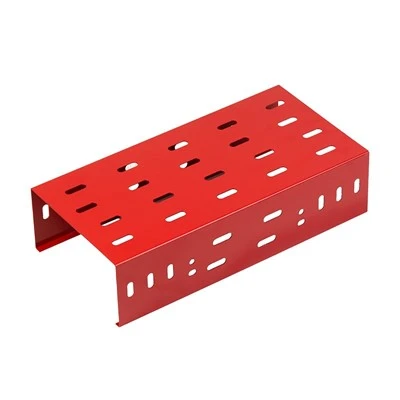
Let’s cut through the jargon first. If you’re working on a data center, a factory floor with heavy machinery, or even a commercial building with tons of IT gear, EMI is a real pain. It’s that fuzzy signal on your security cameras, glitching PLCs on an assembly line, or even a slow lag in your network that nobody can pin down. A lot of people assume any cable tray works for EMI—but that’s not true. Trough cable trays (the closed, U-shaped ones, not the open ladder or wire-mesh types) are built differently, and here’s how they actually pull off EMI protection.
First, let’s keep this simple: EMI is basically unwanted electrical energy radiating from one cable and messing with another. That energy can come from two directions—either external stuff messing with your sensitive cables (like a power line running too close) or your own cables radiating into nearby gear. Trough trays act like a Faraday cage, right? Wait, no—wait, technically a Faraday cage is a fully closed conductive enclosure. But a well-built trough tray comes close because it has solid sides and a solid bottom, not gaps. Open types like ladder trays have big holes, so EMI can sneak right through. I’ve seen projects where a ladder tray for data cables caused so much interference that the whole Wi-Fi in a hospital wing died—switch to a trough tray, fixed it overnight. That’s not a fluke; it’s physics.
Now, let’s break down the science without making your eyes glaze over. Every conductive material (steel, aluminum, even galvanized steel which we use a lot) has something called skin effect. At high frequencies, electrical current doesn’t flow through the whole cable—it hugs the surface. Trough trays use that. If a cable inside is radiating EMI, the tray’s metal catches that current, and since the tray’s grounded (key word—no grounding, no EMI block!), that radiated energy gets drained to the ground instead of bouncing into other cables. Same thing goes for external EMI: the conductive tray acts as a barrier, so that incoming energy can’t reach the cables inside.
But wait—this only works if the trough tray is installed right. I’ve had clients come to me saying, “Your trough tray didn’t stop EMI!” and half the time it’s because they left the cover off, or didn’t ground each section every 10 feet, or had gaps between tray sections. If you have a 2-inch gap between two tray pieces, that’s like leaving a window open in a soundproof room—EMI leaks through. We always tell our clients: cover every section, ground at each joint, and don’t cut corners on the connections. The good news is, when you do it right, the attenuation (that’s the tech term for how much EMI gets blocked) is usually 90% or more for most commercial and industrial frequencies. That’s way better than any open tray can do.
Let’s talk about real-world examples because that’s what matters. Last year, a big automotive plant near Detroit reached out. They had their assembly line PLCs glitching nonstop—turns out their old install used open ladder trays for both power and control cables. The heavy motor cables were radiating so much EMI that the control signals couldn’t keep up. We re-did their cable run with our galvanized steel trough trays, separated power and control cables inside the tray with a metal divider (another trick—separate them so they’re not too close), grounded every section, and overnight the glitches were gone. The plant manager texted me at 2 a.m. to say they didn’t have to shut the line down for repairs—saved them like $50k in downtime in one night. That’s the kind of win that makes this job worth it.
Another one: a data center in Texas. They were upgrading their server room and needed to run fiber optic cables alongside 480V power cables. The architect was worried about EMI messing with the fiber signals. We recommended our aluminum trough trays—aluminum is lighter, so it’s easier for ceiling runs, and it’s a great conductor for EMI blocking. We spaced the power cables on one side, fiber on the other, covered the tray, and grounded it to the building’s main ground. After installation, their signal loss dropped from 12% to less than 1%—way under the industry standard. They didn’t have to re-route all the cables, which saved them a ton of time and money.
But here’s the thing—trough cable trays aren’t a silver bullet. If you’re dealing with extremely high-frequency EMI, like radar or certain medical devices, you might need a specialized tray with thicker metal or a conductive coating. For most standard uses—data centers, manufacturing, office buildings, even hospitals—our standard trough trays work perfectly. The key is matching the tray material to your needs: steel is cheaper and great for heavy industrial, aluminum is lighter for easy installs, stainless steel for corrosive environments like chemical plants.
Wait, let’s address a common myth: some people say, “We can just shield the cables instead of using a tray.” Yeah, cable shielding helps, but it’s not as reliable. Shielded cables can get damaged over time (if someone nicks the jacket during installation, the shielding is broken), and they’re more expensive. A trough tray is a physical barrier that protects the cables from both EMI and physical damage—like if a forklift bumps a cable run, or water splashes on it. It’s a two-for-one: EMI protection and physical protection. That’s why contractors and engineers keep coming back to trough trays for critical runs.
I get why some folks are skeptical. A lot of cheap tray manufacturers cut corners—thin metal, poor welds, flimsy covers. Those don’t work for EMI. That’s why we test every tray we make for EMI attenuation in our in-house lab. We don’t just go by specs—we actually measure how much EMI gets through before it leaves our warehouse. If a tray doesn’t hit our 90% minimum attenuation mark, it doesn’t ship. No exceptions. That’s how we’ve built trust with clients over the years—we don’t sell something that doesn’t do what it says it will.
Now, let’s talk installation tips because even the best tray fails if you install it wrong. First, always ground each tray section. Use grounding clips at every joint, not just one every few sections. If the tray isn’t properly grounded, that radiated EMI can’t drain away, so it just bounces around inside the tray or leaks out. Second, keep cables separated inside the tray—power cables and signal/control cables should be at least 6 inches apart, or use a metal divider, if possible. Third, use a tight-fitting cover. Gaps larger than 1 inch on a tray cover can let EMI through. Fourth, avoid running trays parallel to other conductive metal runs (like pipework or other trays) if they carry current—if you have to, keep them at least 1 foot apart.
Let me wrap this up with a clear answer: yes, trough cable tray can effectively prevent EMI—if it’s the right type, installed correctly, and grounded properly. It’s not magic, it’s just good design and following basic physics. Open trays, ladder trays, wire mesh—they’re great for some jobs, but not for critical runs where EMI is a risk. If you’re working on a project where signal integrity matters, give trough trays a look.
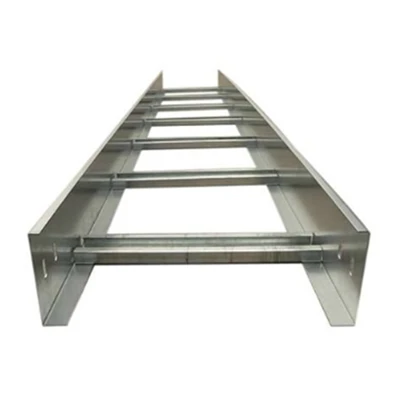
If you’re in the middle of a project, need to troubleshoot an EMI issue, or just want to chat about what tray would work best for your run, hit us up. We’re here to help, no sales pitch, just actual advice from people who’ve installed these trays a thousand times.
C Channel References
- IEEE Standard for Electromagnetic Compatibility (IEEE Std 115-2019)
- National Electrical Manufacturers Association (NEMA) Standard for Cable Trays (NEMA VE 1-2020)
- "Electromagnetic Shielding Using Metal Enclosures" from the Journal of Electromagnetic Waves and Applications, Vol. 32, No. 15, 2018
Hebei Jinglang Industrial Co., Ltd.
As one of the most professional trough cable tray manufacturers and suppliers in China, we also support customized service. We warmly welcome you to wholesale high quality trough cable tray in stock here from our factory. If you have any enquiry about quotation, please feel free to email us.
Address: Nanxinzhuang Village, Daweihe Hui and Manchu Township, Wen’an County, Langfang City, Hebei Province
E-mail: 18231629992@163.com
WebSite: https://www.jinglangcabletray.com/
