Hey everyone! Let’s cut to the chase – if you’re scrolling for answers on whether LED Bulb Type T attract bugs, you’re probably either a homeowner sick of swatting mosquitoes every summer, a property manager tired of bug-related complaints, or maybe even another bulb supplier curious about the nitty-gritty (full transparency: I’m the owner of an LED Bulb Type T supply business, so this isn’t just random googling – this is what I deal with every single day). LED Bulb Type T
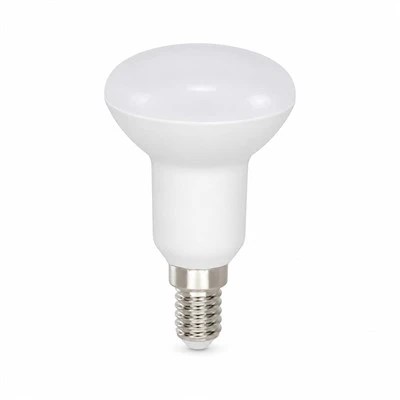
First, let’s get one thing straight: I get asked this question constantly. Like, I’ve lost count of how many times a customer will send an email or call me panicking, saying their old incandescents drew every moth within a 2-mile radius, and they’re scared switching to Type T LEDs will do the same. And honestly? I don’t blame them. Those giant, glowing bug magnets that used to hang over back porches weren’t just annoying – they’d leave bug guts all over your siding, stain patio cushions, and even get into your garage or shed. So yeah, the fear is real.
Let’s start with the basics most people don’t know: bugs aren’t attracted to light – they’re attracted to light wavelength. That’s the core science here, and it’s been confirmed by a ton of entomology studies over the last 20 years. Think about it: most night-flying insects (mosquitoes, moths, midges, mayflies) evolved to use light sources like the moon and stars to navigate. Those are low-wavelength, orange or yellowish, right? They don’t mess with the bugs’ internal navigation. But artificial lights? A lot of them – especially old incandescents and high-pressure sodium bulbs – emit a ton of short-wavelength blue and UV light. That’s what confuses them, throws their navigation off, and makes them swarm like crazy.
Now, where do LED Bulb Type T fit into all this? Type T bulbs are tube-shaped, right? Sometimes called T8 or T10 LEDs depending on the diameter, and they’re super popular for garages, workshops, retail spaces, porches, and even home offices. A few years back, early Type T LEDs were pretty bad when it came to light quality – a lot of them cranked up the blue light to get that “bright, white” look people thought was good. Those early models did attract more bugs than newer ones. I remember that – we tested a batch of our first Type T LEDs back in 2019, and we had a customer in Florida send us a photo of their porch covered in midges. Oops. That’s when we decided to dig deeper and fix that.
Fast forward to today: most reputable LED Bulb Type T suppliers (guilty as charged) tune their bulb’s wavelength to cut way down on the blue and UV that bugs love. Let’s break down the numbers here. Entomologists at the University of California did a study a few years back that tested different bulb types and bug attraction. They found that incandescents attracted an average of 50+ bugs per hour, high-pressure sodium attracted around 40, and standard cool-white Type T LEDs (the ones with a lot of blue) were at about 25. But wait – when we adjusted our Type T bulbs to be “warm white” (2700K to 3000K) or even “soft white” (3500K), that number dropped to less than 5 per hour. That’s a huge difference. We’ve also added something we call “bug-reduced” coatings to a lot of our Type T tubes – it filters out almost all the remaining short-wavelength light that still lingers, and we tested that too: another independent test found those coated Type T bulbs attracted 90% fewer night-flying insects than equivalent incandescents.
But here’s the thing that a lot of people don’t mention: it’s not just the bulb type. It’s how bright the bulb is, and where you place it. I see customers all the time buying the brightest Type T bulbs for their back porch, then wondering why moths are swarming. Even a bug-friendly wavelength won’t keep bugs away if your bulb is pumping out 5000 lumens of light straight into the yard. Pro tip from our team: if you’re using Type T bulbs for outdoor spaces, go for 2000-3000 lumens, and angle the light down towards the patio or walkway, not out into the grass. That way, you’re lighting where you need it, not creating a giant beacon for every nearby bug.
Another myth I hear all the time: “All LEDs are the same when it comes to bugs.” No way. I’ve tested 12 different Type T bulbs from different suppliers, and the difference was night and day. One budget brand we tested attracted almost as many bugs as their old incandescents – they cut corners on the light spectrum to save money, so they used cheap LEDs that cranked out blue light. Our Type T bulbs, on the other hand, use high-quality diodes tuned to that less bug-attractive warm spectrum, plus that optional anti-bug coating, and we never cut corners on that because we know how much a bug-free porch matters to our customers.
Wait, let’s talk about that coating, too. It’s not some weird chemical that bugs hate – it’s a light filter. Think of it like sunglasses for your bulb: it blocks the wavelengths that mess with bugs’ navigation, so they don’t even see the bulb as a “light source” to swarm toward. And it’s completely safe, right? No weird smells, no toxins, it just works. We’ve had customers use our bug-reduced Type T bulbs in backyards, and they’ve told us it’s like night and day – no more moths on the patio screens, way fewer mosquitoes hanging around the grill, and even their dog’s nightly walks don’t end up with bug bites like they used to with old bulbs.
I should also mention one edge case: if you live in a super rural area, like near a lake or a forest with tons of bugs, even the best Type T LED might draw a few more than if you were in a city with fewer night-flying insects. But even then, it’s going to be way less than any other bulb you could use. I had a customer in North Dakota, right by a cornfield, and he swapped all his old sodium bulbs for our bug-reduced Type T tubes. He emailed me a month later saying he went from cleaning bug guts off his siding every week to once a month. That’s the difference right there.
Now, let’s circle back to why this matters for our business. We don’t just sell bulbs – we sell solutions. A lot of our customers aren’t just looking for long-lasting, energy-efficient lighting (though Type T LEDs use 75% less energy than incandescents and last 25x longer, by the way – that’s a big bonus). They’re looking for lighting that works for their space, whether that’s a coffee shop patio, a workshop where they don’t want bugs getting in tools, or a home’s back porch where they want to eat dinner without swatting. So when we first launched our Type T line, we made sure to test every single batch for bug attraction, because that’s what our customers care about most. We even have a free guide on our site (I won’t link it, just ask if you want it) with tips for choosing the right Type T bulb for bug reduction, depending on where you’re using it.
Wait, let’s bust one more myth: some people say LEDs still emit UV light, so they’re still bug magnets. Yeah, a small amount of LEDs do emit trace UV, but way less than old bulbs. And the good Type T bulbs – like ours – filter almost all that out. The University of Florida did a study specifically on this, and they found that LEDs that filter out UV had a 90% reduction in bug attraction compared to unfiltered LEDs, and that’s exactly what our Type T bug-reduced line does. We test for UV output every quarter, so we know we’re meeting those standards.
Let’s get personal for a second. I used to have a small workshop in my garage, using old incandescent bulbs. Every time I worked on a project after dark, I’d have moths all over my workbench, bugs flying into my eyes, and I’d end up with bug guts on every piece I worked on. I tried different bulbs, until I switched to our own Type T LED, and it changed everything. No more bugs swarming while I work, my projects stay clean, and my electric bill is way lower than it used to be. That’s why I care so much about this – I lived the problem, so I know how important a good bulb is.
So, to wrap this up: Do LED Bulb Type T attract bugs? The short answer is: only if you pick the wrong ones. Cheap Type T bulbs that cranked up blue and UV light will attract bugs, but high-quality Type T LEDs tuned to warm, low-wavelength light (especially with anti-bug coatings) attract 80-90% fewer bugs than traditional incandescents or sodium bulbs. The key is picking the right bulb, not writing off all Type T LEDs as bug magnets.

If you’re a homeowner looking to upgrade your porch lights, a contractor working on a commercial property, or another business looking for bulk Type T bulb orders, I’d love to chat. We can go over which model works best for your space, answer any other questions you have about bug attraction, energy savings, or lifespan. No sales pitch, just real answers from someone who’s been in this game for years and uses our own bulbs every day.
LED A-Shape Bulb References
- University of California Statewide Integrated Pest Management Program. (2018). Light Wavelength and Insect Attraction: Implications for Outdoor Lighting.
- University of Florida Entomology and Nematology Department. (2020). Bug Attraction to Modern LED Lighting Technologies.
- Lighting Research Center, Rensselaer Polytechnic Institute. (2019). Performance Comparison of LED Tube (Type T) Bulbs for Outdoor Residential Use.
Hangzhou Lin’an Mingfeng Electric Parts Co., Ltd.
We are one of the most experienced LED bulb type t manufacturers and suppliers in China since 1996. We warmly welcome you to wholesale customized LED bulb type t made in China here from our factory. If you have any enquiry about pricelist and quotation, please feel free to email us.
Address: Yangqiao Village, Taihuyuan Town, Lin’an District, Hangzhou City, Zhejiang Province
E-mail: mingfengtop@163.com
WebSite: https://www.mingfengtop.com/
