Let me start by setting the scene—if you’re reading this, chances are you’re either a facility manager who’s spent three winter seasons troubleshooting a diesel generator that dies mid-snowstorm, or you’ve just taken delivery of a new industrial genset from our warehouse and are staring at the frayed instruction manual wondering how to make sure it performs when the grid goes dark next December. I’m Jake, lead service tech at [our company name], and over the last 12 years, I’ve winterized 187 industrial gensets for warehouses, hospitals, and remote mine sites across the Midwest. The biggest mistake I see buyers make is waiting for the first frost to Google “how to winterize a diesel generator.” By then, it’s too late—you’re juggling frozen fuel lines, clogged filters, and a generator that cranks but won’t catch, when you should be testing it, not fixing it. Industrial Diesel Generator Set

Winterizing an industrial diesel genset isn’t just “changing oil and calling it a day.” It’s a system-wide check that addresses the unique way cold weather—temperatures below 40°F (4°C), and especially below 20°F (-7°C)—breaks down components that work fine in 70°F (21°C) weather. I’ve seen a $500,000 hospital genset go down because the operator skipped fuel anti-gel for one winter; by February, the fuel tank was filled with paraffin wax crystals that seized the injector pump, and they had to tow a mechanic 3 hours in a blizzard. That’s the kind of scenario we’re trying to avoid, one step at a time.
Let’s start with the core of your generator: the fuel system. This is hands-down the most vulnerable part in cold weather. Diesel fuel gets thicker as temperatures drop, and once it hits its cloud point (the temperature where wax crystals start forming), those tiny crystals start sticking together and plugging filters, lines, and injectors. First, you need to know your diesel’s cold weather rating. Standard #2 diesel has a cloud point around 20°F (-7°C), which is fine for mild winters, but if you’re in a place that drops below that, you can’t just “add more anti-gel”—you have to use #1 diesel for the coldest months, or a blend of #1 and #2 that matches your local low temps. Our team at [our company] always advises customers to test the fuel they have in the tank before winter kicks in; a quick field test kit costs $20 and tells you the cloud point and pour point, which is the temperature where fuel stops flowing entirely.
Next, anti-gel additives. Not all anti-gel is created equal. We get a lot of customers who pick up the cheapest stuff at a big-box store and wonder why it didn’t work. Good anti-gel doesn’t just melt wax—it modifies the wax crystals so they stay small enough to pass through filters, and it contains detergents to clean out any existing gunk in lines. The dosage is critical: too little, and it won’t do anything; too much, and it can damage the injector pump seals. Our technicians recommend following the generator manufacturer’s specific guidelines, but as a rule of thumb, treat every 10 gallons of fuel with 1 ounce of high-quality anti-gel. If you have a large genset with a 500-gallon tank, that’s 50 ounces—add it gradually, not all at once, and run the generator for 15 minutes after adding to make sure it mixes evenly with all the fuel in the tank. Also, don’t top off your tank all the way in the fall—wait until mid-winter to top it up. Here’s why: when fuel is exposed to cold air, it contracts, and moisture can seep into empty space in the tank, leading to water accumulation, which causes rust and fuel contamination. By leaving a 10-15% gap, you reduce that risk, and if you need to add more fuel mid-winter, you have space to do it without spilling.
Moving on to the engine’s lubrication system. Cold oil is thicker oil, and if it can’t flow properly, it doesn’t lubricate cylinders, bearings, or camshafts when you start the generator. First, check your oil viscosity. Most industrial gensets are designed for 15W-40 oil in moderate temperatures, but in temperatures below 32°F (0°C), you need to switch to 10W-30 or 5W-40, which flows better in cold weather. Never mix different oil viscosities unless the manufacturer approves it—we’ve had customers do that by accident and end up with oil that’s too thin at operating temperature or too thick when cranking. Along with changing the viscosity, always change the oil filter when you do an oil change at winterization. Old filters can be clogged with debris from the summer, and a new filter ensures proper oil flow when you start in the cold. Also, check the oil level before the first cold snap—low oil is one of the top causes of generator failure in winter, because the thicker oil doesn’t circulate fast enough to protect moving parts.
The cooling system is another make-or-break component. If your genset has a closed cooling system (most industrial ones do), you need to test the coolant concentration to make sure it provides freeze protection down to at least 10°F (-12°C) below the lowest temperature in your area. Coolant is a mix of ethylene glycol (or propylene glycol, if you have a genset near food processing or residential areas where ethylene glycol is a toxicity risk) and water. The ideal mix is 50/50, which gives freeze protection to -34°F (-37°C) and boiling protection to 265°F (129°C)—too much glycol, and it becomes thick, reducing heat transfer; too little, and it freezes easily. We always recommend using a coolant test strip, not just guessing—we’ve seen gensets where the operator only added a gallon of antifreeze to a 50/50 mix, leaving pure water that froze solid in the lines, cracking the engine block. That’s a $10,000 repair, all because of a $3 test strip. Also, flush the cooling system every two years, even if you’re not noticing leaks. Over time, sediment builds up in lines, and coolant loses its corrosion protection, leading to rust in the engine block or radiator, which overheats the generator when you test it.
Now, starting systems. Batteries hate cold weather, full stop. A lead-acid battery loses about 20% of its capacity at 32°F (0°C), and 50% at 0°F (-18°C). If your battery is more than three years old, winter is the time to replace it, not wait for it to die in a storm. First, clean the battery terminals: corrosion can prevent a good connection, so use a wire brush to remove white or green buildup, then apply a thin layer of petroleum jelly to slow future corrosion. Test the battery voltage with a multimeter—at rest, it should be around 12.6V for a 12V system, 25.2V for a 24V system. If it’s below 12.2V (12V) or 24.4V (24V), charge it fully or replace it. Also, if your genset is located in an area that drops below 20°F (-7°C), consider adding a battery heater. Even a small, thermostatically controlled heater that keeps the battery above 32°F (0°C) will make it crank 2-3 times easier, and extend its life by two years. I’ve seen genset operators skip the battery heater and end up with a dead battery at 2 a.m. on a Tuesday, when the power goes out because a snow line knocked down a power line. It’s not worth the stress. Also, test the starter motor every time you winterize it. Crank the engine for 10 seconds, then wait 30 seconds before cranking again—too many fast cranks can burn out the starter, especially when the engine is cold. If the engine cranks slowly, that’s a sign the starter is going bad, and you should replace it before winter, not during a power outage.
We can’t forget the air intake and exhaust systems. Cold, dense air is actually good for diesel combustion, but if your air filter is clogged with dust, leaves, or pollen from the summer, it will restrict airflow, leading to incomplete combustion, black smoke, and even engine damage. Check the air filter before winter—if it’s dirty, replace it. Don’t just blow it off with compressed air, either—once a filter is clogged, blowing it out doesn’t restore its original efficiency, and you’ll risk dirt getting into the engine. For exhaust systems, check the pipes for rust or leaks. Cold air can make rust worse, and a leaky exhaust can let carbon monoxide into the generator enclosure, which is a safety risk, especially if your genset is in a basement or near a loading dock. Also, make sure the exhaust cap (the one that keeps snow and debris out) is in good shape—we’ve had gensets where snow plugged the exhaust, and the generator built up enough back pressure to shut down automatically.
Once you’ve done all the parts checks, the most important step of winterization: test the genset. I don’t care if you “tested it last month”—you need to run a full load test at least once before winter. That means loading the genset to 70-80% of its rated capacity for 30 minutes. Running it at idle doesn’t count—idling for a long time builds up carbon in the injectors and exhaust, which causes problems when you need to pull a load. A load test makes sure all systems work together: fuel flows properly, oil pressure is good, coolant temperature is steady, and the generator transfers power correctly. If you don’t have a load bank to apply a load, you can connect it to essential loads (like a well pump, emergency lights, or a section of your warehouse) for the test. We always tell customers to document every step of the winterization process: oil change date, fuel test results, battery voltage, coolant concentration. That way, when spring comes, you know exactly what you did, and when fall rolls around again, you don’t have to guess if you replaced the filter last year.
Another thing most people overlook: the surrounding environment. If your genset is outside, make sure the enclosure is sealed properly. Check for gaps around doors, vents, or wiring harnesses that cold air or snow can get into. If the enclosure is old, add insulation around the base and the battery compartment—this will keep the internal temperature steady, reducing strain on the engine and battery. For gensets in unheated areas (like warehouse loading docks or remote sites), you can also install a block heater, which warms the engine coolant to make starting easier in cold weather. A block heater uses very little electricity, and pays for itself in one winter by preventing hard starts that wear out the engine.
Wait, what about gensets that are standby vs. prime power? We get this question a lot from our customers. Standby gensets (the ones that kick in when the grid goes down) need extra attention to make sure they start on the first crank. Prime power gensets (the ones that run continuously at remote sites, like construction camps or oil wells) need winterization that focuses more on consistent fuel flow and corrosion protection, since they’re running longer hours in cold weather. For prime power gensets, we recommend adding a fuel water separator drain every week in winter, since cold air can hold less moisture, leading to more water in the fuel tank. And for all gensets, no matter what type, make sure you have a maintenance plan with a qualified technician. Even if you do all the steps yourself, a professional will catch small issues you might miss, like a tiny leak in a fuel line or a worn injector that’s about to fail.
I mentioned earlier that I’ve seen a lot of mistakes, and the one that sticks with me most is a client in northern Wisconsin who waited until the first snowfall to winterize their 1MW genset for their small hospital. When the power went out at 10 p.m. on a Friday, the generator cranked once and died. The mechanic arrived at 2 a.m., after driving through a blizzard, and found that the fuel lines were plugged with paraffin wax because the owner used #2 diesel and no anti-gel. They had to drain the whole tank, replace all the lines, and add the correct fuel blend—costing the hospital over $15,000, plus the risk of losing power for 12 hours while they waited for parts. That’s the exact scenario winterization is designed to prevent.
So, to wrap this up: winterizing your industrial diesel genset is about proactive care, not reactive fixes. It’s about testing fuel before the cold hits, choosing the right oil and coolant, maintaining batteries and starting systems, and making sure your generator is ready to handle whatever winter throws at it. If you’re not sure how to do any of these steps, or you want a professional to take the work off your plate, our team has decades of experience winterizing gensets of all sizes, from 20kW standby units to 2MW prime power generators. We offer seasonal maintenance packages that include all the steps I talked about, plus a full performance test, so you can rest easy knowing your generator will work when you need it most.
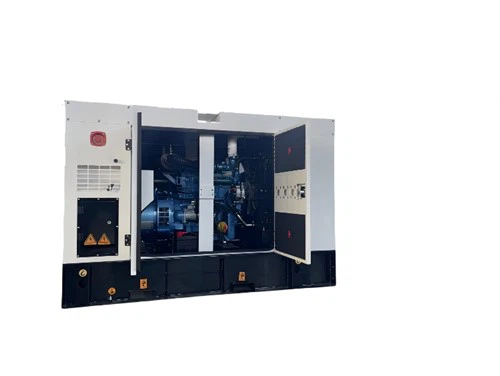
If you’re ready to make sure your genset is winter-ready, or you have questions about what steps are right for your specific unit, reach out to our team to connect for a consultation and quote. Don’t wait until the first frost—plan now, and avoid the headache of a dead generator mid-storm.
Silent Diesel Generator Set References
- Diesel Equipment Manufacturers Association. Cold Weather Operation and Maintenance Guidelines for Industrial Diesel Generators. 2022.
- Automotive Aftermarket Suppliers Association. Winter Fuel and Lubricant Best Practices for Heavy-Duty Engines. 2021.
- Occupational Safety and Health Administration. Generator Safety for Cold Weather Conditions. 2020.
- International Organization for Standardization. ISO 8528: Reciprocating Internal Combustion Engines for Diesel Generating Sets. 2019.
Dianbida Power Equipment (Jiangsu) Co., Ltd.
We’re well-known as one of the leading industrial diesel generator set manufacturers and suppliers in China. We warmly welcome you to buy advanced industrial diesel generator set at competitive price from our factory. If you have any enquiry about pricelist and quotation, please feel free to email us.
Address: No. 23, Nanhuan Road, Jiangdu District, Yangzhou City, Jiangsu Province
E-mail: 19962469616@163.com
WebSite: https://www.js-dbdpower.com/
