If you’re in the market for a CNC router, you’ve probably heard “spindle torque” thrown around as a critical specification—maybe you’ve even skipped over it because it sounds like something only engineers care about. But if you’ve ever seen a CNC router struggle to carve thick hardwood, burn through soft plastic, or snap a bit mid-job, torque is almost certainly the culprit. As a CNC router supplier who’s spent the last 12 years walking new shop owners, hobbyists, and cabinet makers through their machine options, I can promise this isn’t just jargon. It’s the difference between a machine that delivers consistent, high-quality cuts and one that leaves you sanding burn marks or redoing an entire project. Today, let’s break down exactly what spindle torque is, why it matters for your work, how to calculate it, and what to look for when comparing machines. CNC Router

First, let’s get the basics out of the way: a spindle on a CNC router is the motor that holds and spins your cutting bit, right? Torque is the rotational force that spindle generates to turn that bit. If you think of pushing a door open—how hard you twist the doorknob is linear force—spindle torque is the twisting force that makes that cutting bit spin fast enough to slice through material, slow enough to make clean cuts, and powerful enough to push through dense stuff like solid oak without bogging down. It’s measured in Newton-meters (Nm) or pound-feet (lb-ft), and the sweet spot for most CNC routers depends entirely on what you plan to cut.
I’ll be honest, when I first got into this business, I didn’t fully grasp torque either. I sold a cheap entry-level CNC router to a small furniture maker out of Detroit back in 2011. He was excited to switch from hand-cutting his table legs to machine-cutting, and the machine we sold him had a 1.5 kW spindle rated at, as the spec sheet said, “1.5 Nm peak torque.” Within two weeks, he called me frantic. His bit kept snapping when he was cutting his signature table legs from 2-inch solid maple. He thought he’d gotten a defective machine, but when I drove down to his shop to take a look, I realized the problem was simple: that little 1.5 Nm spindle didn’t have enough torque to push a ½-inch straight bit through 2-inch maple at the feed rate he was using. He was running the bit way too fast, and the spindle was straining to turn it. We swapped out his machine for a 3 kW spindle that hit 5 Nm of torque, and he’s been a repeat customer ever since. That story stuck with me—torque isn’t just a number on a spec sheet; it’s what makes your actual work possible.
Now, there are two types of torque you’ll see on CNC router spec sheets: rated torque and peak torque. Rated torque, sometimes called continuous torque, is the steady force the spindle can generate without overheating or wearing out quickly. Peak torque is the short burst of extra force it can deliver for a few seconds, usually when the spindle is accelerating or hitting a small dense patch of material. For most workshop work, rated torque is the number you care about most. Peak torque sounds impressive, but it’s not something you can rely on for long cuts or heavy jobs. A machine with high peak torque but low rated torque will bog down mid-cut, overheat, and ruin bits.
Let’s get into the science a little, and keep this simple, no fancy engineering degrees needed. Torque (T) is calculated by multiplying the force applied (F) by the radius (r) of the circle that force is turning around. For a spindle, that radius is the length of your cutting bit, right? So if you have a ½-inch diameter straight bit, the radius is ¼ inch, or 0.0208 feet. If your spindle exerts 5 lb-ft of torque, that works out to about 240 lb of force at the tip of the bit. That’s a lot of force. If you’re cutting through hardwood, you need that force to be strong enough to slice through the wood fibers without the bit slipping or breaking.
The other key factor that ties into torque is spindle speed (RPM). Torque and RPM have an inverse relationship for most AC spindles, which are the most common on CNC routers. That means when a spindle spins slower, it has more torque, and when it spins faster, torque drops. Think about it: you wouldn’t use a high-speed setting to cut thick aluminum, would you? High speed is for thin material, like ¼-inch MDF or soft plastic, where you want the bit to move fast to get clean edges. For thick, dense material, you need to slow the spindle down and crank up the torque to push through the material.
Let’s use a real example. If you’re cutting 4-inch solid oak for a table top, you’d want a spindle that can run at 10,000 RPM or less, with a rated torque of at least 6 Nm. A 1.5 kW spindle only hits about 3 Nm at low RPM, which is too low for that kind of job. But if you’re cutting thin acrylic for signs or ½-inch pine for a small craft project, a 1.5 kW spindle with 2-3 Nm of torque is more than enough—faster speed, lower torque, perfect for that work.
Now, you might be wondering, what size torque do I need for my specific projects? After 12 years in this business, I can break it down by common use cases. If you’re a hobbyist doing small craft projects, cutting ¼-inch to 1-inch MDF, thin acrylic, or soft pine, a 1.5 kW spindle with 2-4 Nm of rated torque works fine. For small business owners or cabinet makers doing residential work, cutting 1-2 inch hardwood, plywood, and particle board, go for a 3 kW spindle with 5-7 Nm of rated torque. If you’re a commercial shop cutting 2+ inch solid wood, aluminum, or other dense materials, you’ll need a 5 kW or larger spindle with 10+ Nm of rated torque. I’ve seen shops get by with smaller spindles for hobby work, but scaling up often forces you to upgrade your spindle, which is a costly mistake.
Wait a second, there’s a common myth I hear all the time: more power equals more torque. That’s not true. Power is measured in kW (kilowatts) and is a combination of torque and RPM. So a 5 kW spindle can have high torque at low RPM, or high speed at low torque, depending on how it’s designed. A small 1.5 kW spindle is never going to have the same torque as a 5 kW spindle, because power is the combination of both. But you can have two spindles with the same kW rating, and very different torque outputs. For example, I’ve seen two 3 kW spindles: one rated for 5 Nm at 6,000 RPM, and another rated for 3 Nm at 12,000 RPM. The first one is better for heavy cuts, the second for high-speed light cuts. So when you’re looking at spec sheets, don’t just look at kW—look at the rated torque at the RPM you plan to use for your work.
Another thing that affects spindle torque is the type of spindle itself. There are two main types on CNC routers: air-cooled spindles and water-cooled spindles. Air-cooled spindles use fans to keep the motor cool, and they’re usually smaller, lighter, and more affordable for smaller machines. But they can’t handle as much continuous torque as water-cooled spindles, because air cooling isn’t as efficient at dissipating heat. If you’re running a machine 8 hours a day doing heavy cuts, a water-cooled spindle will give you more consistent torque over long periods without overheating. If you’re a hobbyist running a machine a few hours a week, an air-cooled spindle works great. I’ve seen hobbyists running air-cooled spindles for years with no issues, and commercial shops rely almost entirely on water-cooled ones.
There’s also another factor: how well your CNC router is set up, and how you program your cuts. Even if you have a great spindle with high torque, if you’re running your cuts too fast (a higher feed rate than your spindle and bit can handle), you’ll bog the spindle down. Feed rate is how fast the bit moves through the material, and it’s tied directly to torque. If you triple your feed rate, you effectively triple the force the spindle has to generate. That’s why most CNC software will calculate the optimal feed rate and RPM for your material and bit size, based on your spindle’s torque. But it’s something to keep in mind—you can have the best spindle in the world, and mess it up by bad programming.
Now, let’s get back to that first customer of mine, the furniture maker from Detroit. After we swapped his spindle, his work improved so much he started taking on larger commercial jobs, and he referred three other furniture makers to us. That’s the kind of difference getting torque right makes. But I also want to be honest with you: you don’t need the most torque you can buy, no matter what. If you’re a hobbyist doing small craft projects, dropping $5,000 on a high-torque commercial spindle is a waste of money. It’s overkill, and you’ll never use that extra torque. The key is matching your spindle’s torque to your actual work.
I’ve seen a lot of people get tricked by spec sheets that quote peak torque instead of rated torque. Peak torque is usually 2-3 times higher than rated torque, but it’s only for a split second. If a spec sheet says “peak torque: 9 Nm,” that’s great, but you’ll never be able to use that for a long cut. Make sure you’re looking at the continuous rated torque, not the peak. That’s the number that will hold up for your entire project.
Another common question I get: can you upgrade the spindle on an existing CNC router? The answer is usually yes, but it depends on your machine’s frame, power supply, and control system. A lot of entry-level machines have lightweight frames that can’t handle the vibration of a larger, higher-torque spindle. If you try to put a 5 kW spindle on a tiny entry-level frame, you’ll get unstable cuts and more vibration, which ruins the quality of your work. Before you upgrade, talk to your supplier about what your machine can handle. If you’re working with a reputable supplier like us, we’ll help you figure out if an upgrade is possible, and what spindle will work best for your machine and projects.
Let’s wrap this up with a quick takeaway, because I know this can feel overwhelming. Spindle torque is the rotational force that makes your CNC router’s cutting bit spin. Rated torque is the steady force you need for long cuts, while peak torque is a short burst for acceleration. More power doesn’t always mean more torque—look at the rated torque at the RPM you plan to use. Match your spindle’s torque to your projects: low torque for small hobby work, medium for cabinet making, high for commercial dense material work. Air-cooled for occasional use, water-cooled for heavy daily use. Don’t get tricked by peak torque specs, and make sure your machine’s frame and power supply can handle your spindle.
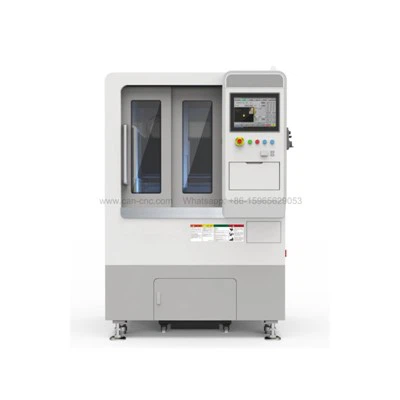
If you’re in the market for a CNC router, or you’re looking to upgrade your current machine, don’t hesitate to reach out. We’ve helped thousands of customers find the right spindle and machine for their specific work, and we can guide you through every step. Whether you’re a hobbyist just starting out or a commercial shop scaling up, we’ll give you honest advice, no sales pitches, just real knowledge from years in the business. We’re here to make sure you get a machine that works for you, not just a spec sheet that sounds impressive. If you want to chat through your projects and figure out the right spindle torque for your needs, contact our team today to start your procurement conversation.
Stone CNC Router References
- “CNC Spindle Basics: Torque, Power, and RPM.” Machinist’s Guide, 2022.
- “Selecting the Right CNC Spindle for Your Application.” Modern Machine Shop, 2021.
- “The Relationship Between Spindle Torque, RPM, and Feed Rate.” CNCCookbook, 2023.
- “Heat Management for CNC Spindles: Air vs. Water Cooling.” Fabricator Magazine, 2020.
Jinan APEX CNC Technology Co., Ltd.
Jinan APEX CNC Technology Co., Ltd. is one of the most professional cnc router manufacturers and suppliers in China, specialized in providing high quality products and service. Please feel free to buy high-grade cnc router for sale here from our factory. For more information, contact us now.
Address: YuanZhuang Industrial Park, Shizhong District, Jinan City, China
E-mail: info@apex-cnctech.com
WebSite: https://www.can-cnc.com/
