If you’ve ever driven past a highway rest stop and spotted a sleek, cylinder-shaped tanker trailer idling at a fueling station, or watched one pull into a chemical plant to load industrial-grade liquid, you might’ve wondered what goes into building that machine. As someone who’s been supplying custom tanker trailers for over a decade—working directly with fleet operators, chemical manufacturers, and fuel distributors across North America—I can tell you this isn’t just a assembly line job. Building a tanker trailer is equal parts engineering precision, material science, and on-the-ground experience that’s honed by years of fixing and refining the designs that actually hold liquids safe. Tanker Trailer
Start with the most critical part: the tank itself. This is the heart of the whole unit, and getting it right means starting with material selection that’s tailored to what the trailer will carry. Not all tanker trailers are the same, after all. A unit hauling gasoline needs a different tank than one carrying hydrochloric acid, and both differ from a trailer hauling milk or food-grade vegetable oil.
For most general-purpose applications, we use heavy-duty carbon steel. It’s cost-effective, easy to weld, and stands up to the dings and corrosion that come with daily over-the-road use. But for chemical transport, stainless steel is non-negotiable. Grade 316L stainless steel, specifically, resists pitting from harsh chemicals and won’t leach contaminants even if a load sits in the tank for days. For food-grade trailers, we opt for polished, food-safe stainless steel that meets FDA standards—no rough seams, no hidden crevices where bacteria can grow. For high-demand loads like liquid nitrogen or other cryogenic materials, we use aluminum-lined insulation and vacuum-sealed tanks to prevent temperature fluctuations that would turn a liquid into gas mid-route. It’s not just a decision we make on a blueprint; we test every material with sample loads in our own workshop first, because a trailer that fails in the field costs operators thousands in lost cargo and downtime.
Once the material is cut, the tank takes shape. First, large steel or aluminum sheets go through a process called cold rolling, where they’re pressed into curved sections that will form the cylinder. These sections are joined together with submerged arc welding, a specialized technique that uses a granular flux to protect the weld from air contamination—this is critical, because even a tiny weak spot can develop a leak under the pressure of a full load. Our welders don’t just follow a script; they inspect every weld with ultrasonic testing, a high-frequency sound tool that detects hidden cracks or gaps no naked eye can see. For stainless steel tanks, we do a passivation process after welding: we dip the tank in a nitric acid solution to remove any iron particles from the weld, which prevents rust from forming later. This step is non-negotiable for chemical and food-grade units; skip it, and you’re asking for contamination and corrosion down the line.
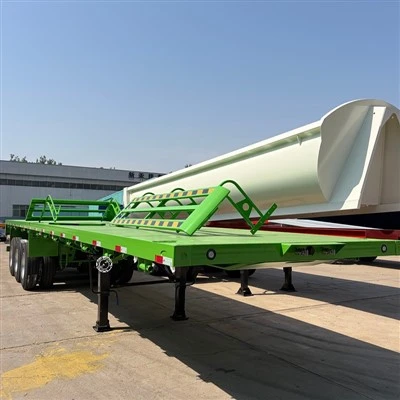
With the tank finished, it’s time to build the chassis—the frame that holds the tank and connects to the truck. The chassis is made from thick steel I-beams, designed to support the tank’s weight, which can hit 30,000 pounds when fully loaded for fuel or chemicals. We reinforce high-stress points—where the landing gear connects, where the fifth wheel (the part that hitsches to the truck) mounts, and where the axle assemblies attach—with extra steel plates. Every chassis is stress-tested with a hydraulic press to make sure it can handle 120% of the maximum load it’s rated for; in our 15 years in business, we’ve seen far too many trailers bend or break because skimping on chassis strength saves a few dollars upfront.
Next, we add the auxiliary systems that make a tanker trailer functional. For fuel and chemical trailers, this includes internal baffles—those curved, metal pieces you see inside the tank. Baffles aren’t just there to divide the tank; they prevent liquid sloshing, which would throw off the trailer’s balance at highway speeds. A sloshing load can cause a driver to lose control, so we size and place baffles based on the tank’s shape and the expected road conditions. For heavy highway use, we add extra baffles that are perforated to reduce drag while still stabilizing the liquid. We also install the valve system at the bottom of the tank: these are quarter-turn valves made from stainless steel, with locking mechanisms to prevent accidental opening. Every valve is pressure-tested, and we test the entire bottom load system with water before the trailer leaves the workshop, because a leaky valve on a highway isn’t just dangerous—it’s a regulatory nightmare.
For specialized trailers, we add even more features. For food-grade haulers, we install cleanout ports and CIP (clean-in-place) systems that let operators sanitize the tank without taking it apart. For chemical trailers, we add pressure relief valves that vent safely if the cargo expands due to temperature changes, and secondary containment pans under the chassis to catch any small leaks. For dry bulk trailers (though our focus is on liquid, I’ve worked on these too), we add air compressors and hopper bottoms to unload dry goods like grains or plastic pellets.
Once the tank, chassis, and systems are assembled, it’s time for the final inspections. This isn’t just a quick look around—each trailer goes through a 12-step process that includes checking tire pressure, brake functionality, light wiring, and the structural integrity of every component. We also test the entire tank for leaks by filling it with water and pressurizing it to 15 pounds per square inch, holding that pressure for 10 minutes while we check every weld and valve. If any part fails, it goes back to the welder or fabricator before moving forward. Before delivery, we also make sure the trailer meets FMCSA (Federal Motor Carrier Safety Administration) standards and any state-specific regulations, because different states have different rules for tanker size, weight, and equipment.
As a supplier, I don’t just sell trailers off a shelf. Every customer has unique needs: a small fuel distributor in rural Iowa might need a smaller, more maneuverable trailer, while a chemical plant in Texas needs a 10,000-gallon stainless steel unit for hauling industrial solvents. We work with each customer to customize the design, adjust materials, and build a trailer that fits their routes and cargo. Over the years, I’ve learned that the best trailers aren’t the ones that are built the fastest or the cheapest; they’re the ones that hold up over time, so operators don’t have to deal with costly repairs or downtime.
If you’re in the market for a new tanker trailer, or looking to replace an old one that’s on its last legs, I’m here to help. We can walk you through material options, customization, and all the regulatory requirements to make sure you get a trailer that works for your business. Reach out to discuss your specific needs, and I’ll connect you with our engineering team to start building the right unit for your operations.
Fence Trailer References
- Federal Motor Carrier Safety Administration. (2022). Tank Vehicle Safety Standards.
- American Welding Society. (2021). Standard for Welding Steel Tanks for Liquid Transportation.
- Stainless Steel Industry Association. (2020). Guidelines for Food-Grade Tanker Trailer Construction.
- National Institute for Occupational Safety and Health. (2019). Chemical Transportation Equipment Safety Standards.
Shandong Yuncheng Xinya Trailer Manufacturing Co., Ltd.
Shandong Yuncheng Xinya Trailer Manufacturing Co., Ltd. is one of the most experienced tanker trailer manufacturers and suppliers in China, featured by quality products and good service. Please rest assured to buy CE approved tanker trailer from our factory. Contact us for customized service and OEM service.
Address: No. 008, Hexie Road, Yangzhuangji Town, Yuncheng County, Heze City, Shandong Province
E-mail: fiona@xinyatrailer.com
WebSite: https://www.china-truckfactory.com/
