Hey everyone, if you’ve ever been out at a job site, a farm, a car wash, or even just tending to your backyard and thought, “Ugh, untangling this kinked hose is such a pain,” you might’ve run into a stainless steel hose reel and didn’t even know it. I’ve been supplying these things for years, and let me tell you—they’re way more than just a fancy spool to wind up a hose. Let’s break ’em down like we do with our customers who call up confused about what exactly they’re buying. Hose Reel
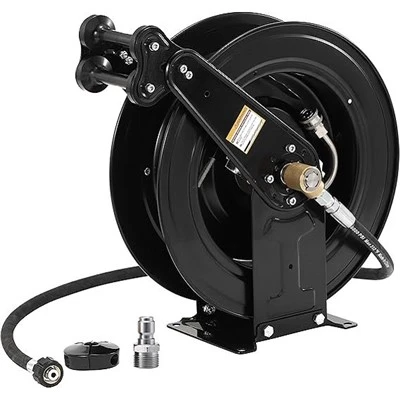
First off, what even is a stainless steel hose reel, anyway? Let’s start super basic: it’s a device designed to hold, organize, and deploy hoses (for water, air, chemicals, whatever) without tangling. The “stainless steel” part means the main frame, spool, and often internal parts are made from a metal that resists rust, corrosion, and that random grime you get from being outside, near water, or harsh chemicals. That’s the big difference from a regular plastic or galvanized steel reel—plastic breaks when it’s cold, galvanized steel rusts out after a year near saltwater, and cheap steel reels corrode fast. We’ve had customers bring back reels that got all crusty from sitting in a barn, and now they only go stainless.
Wait, let’s get into the science part a little, no boring textbook stuff. Stainless steel is an alloy, right? Mostly iron, with about 10.5% chromium added. That chromium reacts with oxygen in the air or water to form a super thin, invisible layer called a passive film. If the surface gets scratched, that film repairs itself automatically—no rust, no holes. That’s why these reels last so long. We’ve got some reels we sold 8 years ago that still look almost new, even out by a coastal marina where salt air eats everything. Compare that to the plastic reel your neighbor bought last spring that’s already cracked and stuck.
Now, not all stainless steel hose reels are the same. We categorize ’em based on what they’re built for, because you wouldn’t use a reel for air compressors on a car wash line handling high-pressure water, y’know? Let’s run through the main types we supply, since that’s what our customers actually care about.
First, spring-driven manual reels. These are the most common—most people have seen these hanging on garage walls or at farm supply stores. You crank a handle to pull out the hose, and when you let go, the spring inside rewinds it smoothly, no tangles. The stainless steel here is key because if you’re using ’em for outdoor stuff, rain doesn’t make the spring rust and seize up. We sell a ton of these to residential users, small landscapers, and car detailers who need a lightweight but tough option.
Then there’re motorized stainless steel reels. These are for heavy-duty jobs where you can’t crank a hose—like construction sites where the hose is 100 feet of high-pressure water for pressure washers, or industrial settings where you’re moving hoses of coolant or chemicals. The motor is usually powered by electricity or even hydraulics for big rigs, and the stainless steel housing keeps the motor safe from dust, moisture, and spills. A lot of our industrial customers switch to these because they cut down on downtime—no one’s spending 10 minutes trying to untangle a heavy hose, the reel just does it fast.
We also have hose reels for specific applications, like air hose reels for mechanics, chemical hose reels for farms that use fertilizers, and even reels for water hoses for firefighting teams. Wait, yeah—fire departments use stainless steel reels because they need to hold up to extreme conditions, and they can’t afford a reel that breaks when they’re in a hurry. That’s the stuff that makes our work matter, not just selling a product, but something that people rely on.
Let’s talk about why stainless steel is non-negotiable for so many use cases, because I hear customers all the time ask, “Why not just get a cheaper aluminum one?” Aluminum is light, but it dents easily. Drop a heavy bucket on an aluminum reel frame, and you’ve got a bent spool that won’t wind right. Stainless steel is tough—we’ve had customers bump a reel with a truck, and it just got a scratch, no damage. Also, corrosion: if you’re working around salt, acids, or even just regular muck from a job site, stainless steel doesn’t react. A galvanized steel reel might be cheaper upfront, but after a year in a wet, muddy farm barnyard, it’ll have rust holes, and the hose will catch on the rust, tearing it up. We calculate that over 3 years, a stainless steel reel is actually cheaper than replacing a cheap one every 12 months. That’s not just sales talk—our data shows it, and we’ve got hundreds of reviews from customers confirming that.
Wait, another thing a lot of people don’t know: stainless steel hose reels aren’t just for outdoor stuff. We supply a lot of restaurants and food processing plants with them too. Why? Because stainless steel is food-safe. You can wipe it down with harsh cleaners, it doesn’t leach chemicals into the hose, and it doesn’t harbor bacteria like some plastic materials. That’s a big one for places that need to meet health codes. I once had a food truck owner come to us because their old plastic reel was getting moldy behind the hose, and they couldn’t pass their health inspection. They switched to our stainless steel wall-mounted reel, and they’ve had no issues since.
Let’s clear up a common myth: a lot of folks think all stainless steel is the same, but there are different grades. The stuff we use for our reels is 304 stainless, mostly—It’s the most common, great for general corrosion resistance, works for water, air, mild chemicals. For customers dealing with harsher stuff, like strong acids or saltwater in marine applications, we offer 316 stainless. That’s a step up, more resistant to those tougher corrosives. We don’t skimp on this—we’ll tell customers which grade they need, not just push the expensive one. If someone’s just using a reel for garden water, 304 is more than enough. If they’re handling fertilizers at a farm, 316 is worth the extra cost. That’s how we do business, not like the big box stores that sell a one-size-fits-all reel.
Now, what makes a good stainless steel hose reel vs. a cheap knockoff? Let’s be real, there are a lot of reels out there labeled “stainless steel” that are just cheap steel with a thin coating that rubs off after a few months. A few things to check: look at the internal parts, not just the outer frame. A lot of knockoffs have a plastic or steel spring that will rust, even if the frame is stainless. Our reels have stainless steel internal springs and gears, so the whole thing is resistant. Also, check the spool—our spools are thick gauge stainless, so they don’t bend when you load a heavy hose. Knockoff spools are thin, so if you wind a 100-foot high-pressure hose on it, the spool warps and the reel won’t work right. We’ve had customers bring those knockoffs to us, and it’s obvious—they can tell the difference in weight and sturdiness the second they pick ’em up.
Let’s get into how these reels make life easier, because that’s why people buy ’em. I used to do landscaping in college, and I can’t tell you how many times I wasted time untangling a hose that was just a big ball of knots. With a reel, you pull out exactly how much hose you need, no more stepping on it, no more kinks. That means less wear and tear on the hose, so you don’t have to replace your hose every year. Also, organized hoses mean fewer trips and falls around job sites, or no tripping over a hose in a garage. For car washes, motorized reels mean workers don’t have to drag a 50-foot hose across concrete all day—they can just use the remote or a switch to deploy and retract it. We had a customer who runs a fleet of 10 car washes tell us that switching to our stainless reels cut their hose replacement costs by 40% because they weren’t dragging hoses as much. That’s a real number, not something I made up.
Wait, can you use a stainless steel hose reel for other stuff besides water hoses? Yeah, absolutely. We supply reels for air hoses for mechanics to run tools, for fuel hoses for small equipment, even for cable management in some industrial settings. The key is just to match the reel’s pressure rating and size to what you’re using. A 3/8-inch air hose needs a reel rated for that pressure, obviously—you don’t want a low-pressure reel handling a high-pressure air tool, that’s a safety hazard. We always make sure to ask customers what they’re using the reel for, so we point ’em to the right model. That’s the service part of being a supplier, right? It’s not just selling a product, it’s making sure it works for their specific needs.
Let me touch on maintenance, because even the best reels need a little upkeep. The good news with stainless steel is it’s super low-maintenance, way less than other materials. We tell customers to just wipe it down occasionally to get rid of dirt and grime, and maybe lubricate the spring mechanism once a year if it’s in a really harsh environment. No painting, no sealing, just basic upkeep. Compare that to a wooden reel, which you have to oil every six months, or plastic, which cracks and fades in the sun. Stainless steel just holds up. We’ve never had a customer complain about rust on one of our reels, even after 5 years outdoors in the sun and rain.
Now, why would you choose a stainless steel hose reel over other options? Let’s recap: durability—lasts way longer than plastic, aluminum, or cheap steel. Corrosion resistance—works in wet, salty, or dirty environments. Low maintenance—almost no work to keep it running. Food-safe options if you’re in restaurants or food processing. Versatile—works for water, air, chemicals, whatever you need. Yeah, upfront it might cost a little more, but when you add up not having to replace it every 1 or 2 years, and less downtime because it doesn’t break, it’s a way better investment.
I get it, if you’ve never needed a hose reel before, it’s easy to think it’s just a gadget you don’t need. But once you’ve tried winding a 100-foot hose by hand, untangled a kinked hose that’s been left out all winter, or dealt with a broken reel that held up your work for an hour, you realize how useful it is. And stainless steel is the way to go if you don’t want to deal with that headache.
At the end of the day, we don’t just sell hose reels. We sell solutions for people who need to keep their jobs running smoothly, whether that’s a homeowner tending to their lawn, a mechanic working on cars, or a construction crew getting a job done on time. If you’re in the market for a new hose reel, whether it’s for residential, commercial, or industrial use, we’ve got the stainless steel options to fit what you need. Don’t waste money on a cheap reel that’ll break in a year—let’s chat, figure out exactly what you’re looking for, and get you set up with something that’ll last.
Surface Cleaner References
- Stainless Steel World Corporation. (2022). Corrosion Resistance of Austenitic Stainless Steels.
- American National Standards Institute (ANSI). (2021). Standard for Hose Reels for Industrial Applications.
- Food and Agriculture Organization (FAO). (2020). Stainless Steel Equipment for Agricultural and Food Handling Facilities.
Zhejiang GTM Hi-Tech Intelligent Equipment Co., Ltd.
We are one of the most experienced hose reel manufacturers and suppliers in China, also support customized service. Please feel free to buy discount hose reel for sale here from our factory. Quality products and reasonable price are available.
Address: No.5 of Changjiang Road, 2nd Economic Development Zone of Wenling, Zhejiang, China
E-mail: yehuanting1@hongyemfg.com
WebSite: https://www.gtmplungerpump.com/
