Let me start by saying something most people don’t tell you about being a city e-bike supplier: every week, a dozen potential customers pull up to our shop, eye the sleek, step-through frames on the rack, and ask the same question: “Are these things actually worth the cash?” It’s not just a throwaway question—they’ve dropped $1,500 to $3,000 on a traditional bike before that collected dust in a hallway. They’ve dealt with rain-soaked commutes, stolen rides, and the awkwardness of sweating through a job interview before they even sit at their desk. So when they ask about e-bikes, they’re not just shopping for a toy. They’re trying to figure out if swapping their rusty hybrid for a motor-assisted two-wheeler is a smart financial and lifestyle call. City Electric Bike
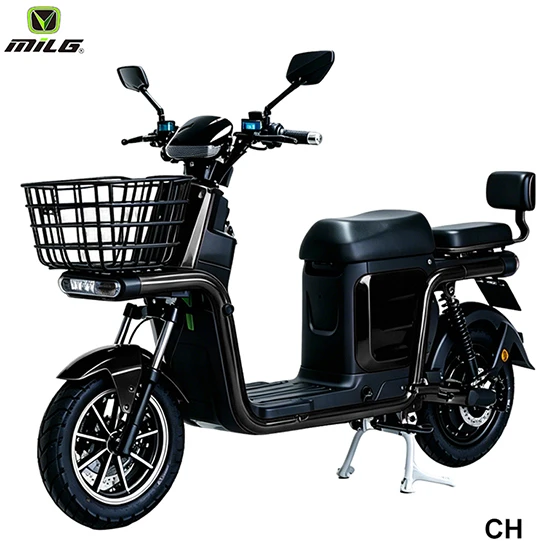
I get it. E-bikes aren’t cheap. A quality city model will run you more than a used entry-level car, and way more than that $200 department-store bike you bought to “get fit” in college. But after five years of selling these in downtown areas where parking costs $40 a day and bus routes are 10 minutes late 30% of the time, I can tell you: for most urban riders, they aren’t just worth the money—they’re a better investment than almost any other daily commute tool you can buy. Let’s break this down the way we do at our shop, no sales pitch fluff, just the hard numbers and real-world stuff we see every day.
First, let’s talk about the cost savings that add up fast. The average urban commuter in the U.S. spends about $8,464 a year on car-related expenses: gas, insurance, parking, maintenance, and registration, according to the American Automobile Association. That number jumps in places like New York or San Francisco, where monthly parking alone can hit $500. Now, compare that to a city e-bike. The upfront cost is higher than a regular bike, but let’s run the math. A mid-tier city e-bike (the kind we sell—light enough to carry up a flight of stairs, with a 40-mile range) costs roughly $2,200. The annual operating costs? Almost nothing. Charging the battery takes about 50 cents of electricity and lasts a week. Tires and brakes are cheap, maybe $100 a year total. Lock it up with a decent U-lock, and you avoid that $40 daily parking fee.
I’ve seen customers run the numbers themselves. A teacher who commutes 7 miles each way swapped her $120 monthly bus pass for an e-bike. She calculated she spent $2,100 on the bike, plus $100 in accessories the first year. In 10 months, she’d already saved more than the cost of the bike. A graphic designer who used to drive 5 miles to work and paid $35 a day in parking stopped that. In 8 months, the e-bike paid for itself. Sure, you can get a cheap e-bike for $800, but those tend to have short battery lives and break down fast—more maintenance costs down the line. Our city models are built for stop-and-go city streets, with frames that hold up to potholes and motors that handle hills without dying. That’s where the value kicks in over time.
Then there’s the hassle factor, which is where e-bikes actually beat every other commute option. Let’s be honest: city driving sucks. You’re sitting in traffic, honking at people, spending 15 minutes circling a block for parking. Public transit? You’re crammed next to someone eating a smelly sandwich, waiting in the rain for a bus that’s late. E-bikes let you skip all that. Most city streets have bike lanes, so you can weave through traffic instead of being stuck in it. We had a customer last spring who worked in a downtown office and used to take the subway—he’d leave his apartment 20 minutes early just to catch the train, and still be late twice a week. With his e-bike, he leaves 10 minutes later, arrives exactly on time, and doesn’t have to deal with delays. He told me after three months he’d never go back.
And let’s not forget the physical side. A lot of people say, “I don’t want to exercise on my commute.” But here’s the thing: e-bikes are motor-assisted, not motor-powered. You still pedal—you just get a boost when you need it. If you’re tired after a long day, you can turn the motor up and glide up that steep hill without huffing. If you’re fresh, you can dial it back and get a solid workout. Our customers tell us they’re not sweating through their work clothes anymore, too—we stock little things like quick-dry seat covers and electric motors that kick in at low speeds, so you don’t burn out before you get to the office. A nurse who commuted 6 miles told me she used to be too sore after her shift to go to the gym. With her e-bike, she gets a 20-minute ride home, and feels energized enough to do a quick workout when she gets there. That’s a hidden value no one talks about.
But wait—what about the downsides? We don’t sugarcoat this at our shop. E-bikes are heavier than regular bikes, so carrying them up stairs to a apartment can be a pain. The battery needs to be charged every few days, and if you leave it out in the cold, it doesn’t hold a charge as well. And theft is real—we’ve had a couple customers lose their first e-bikes because they used a $20 cable lock. But those are fixable. Buy a $150 U-lock with a chain, keep the battery indoors (most of our customers just bring it inside to charge at night), and if your apartment has a storage closet, get a hook for the wall. The heavy frame? Most city e-bikes have integrated handles so you can lift them easily, or we sell small motorized carts for people who can’t carry them. We also offer extended warranties for our bikes, so if something breaks, you don’t have to pay a fortune to fix it.
I want to address the big myth here: “E-bikes are just for rich people.” Yeah, a $5,000 carbon-fiber e-bike is a luxury, but the ones we sell start at $1,800, and that’s a bike that will last 5 to 7 years with regular care. Compare that to a car, which depreciates 20% the second you drive it off the lot, and needs repairs every year. Or a bus pass that goes up 5% a year, with no end. For people who commute 5 to 10 miles a day, that e-bike is an asset that pays for itself, not a depreciating expense. We also work with local businesses and apartment complexes that bulk-order our city e-bikes for employees or residents—for them, the math is even clearer. A bulk purchase cuts the cost per bike, and they save thousands a year on parking and transit costs.
Last month, a small coffee shop owner came to us. She wanted to give her delivery drivers e-bikes instead of scooters, which kept breaking and got stolen all the time. We sold her six city e-bikes, and she calculated she saved $1,200 in scooter repairs the first three months, plus the drivers are faster on bikes than on scooters. Her delivery time went down 15%, and customers tipped more because their orders arrived hot. That’s another angle: e-bikes aren’t just for personal use. For small businesses, they’re a revenue tool, not just a commute tool.
So when a customer stands in our shop, asking if a city e-bike is worth the money, I don’t just say “yes.” I walk them through their commute. How far do they go? Where do they park? What’s their current monthly expense for getting to work? If they’re spending more than $100 a month on transit or parking, and they can handle a 10-mile ride, the answer is almost always yes. We’ve had customers who came in skeptical, test-ride a bike, and leave that day with one. A college student who used to Uber to class saved $80 a month by getting an e-bike. A retiree who started going to the library and coffee shops every day said his e-bike gives him a reason to leave the house, and it cost less than his old car’s annual insurance.
Is there a case where an e-bike isn’t worth it? Sure. If you live in a place with no bike lanes, commute 20 miles or more, or have trouble lifting heavy objects, it might not make sense. But most urban areas—even midsize ones—have good bike infrastructure now, and the weight of our city e-bikes is manageable for most people. We’ve adjusted our models over the years to be lighter, with lower step-through frames so even people with bad knees can get on and off easily.
At the end of the day, this isn’t about selling a product. It’s about solving a problem. Our customers don’t buy e-bikes because they want a fancy gadget. They buy them because they’re tired of wasting money on parking, tired of being late, tired of feeling sore or stressed after their commute. A city e-bike is an investment in your time and money, not just a toy. If you’re someone who’s spent months weighing the cost, test-ridden a couple, and you’re on the fence, that’s the first step.

If you’re a business owner, facility manager, or individual looking to explore bulk orders or test rides, we’re here to help. We’ve customized packages for small offices, apartment complexes, and even tourism groups, with models tailored to different needs and budgets. We don’t push one-size-fits-all solutions—we take the time to figure out what works for you.
Cargo Tricycle So when you’re asking if a city electric bike is worth the money, the answer is: if it fits your commute, your budget, and your lifestyle, absolutely. It’s not a splurge. It’s a smarter way to get around.
References
- American Automobile Association. (2024). Your Driving Costs: Annual Expenses for Cars and Light Trucks.
- League of American Bicyclists. (2023). Urban Commuter Bike Infrastructure Report.
- National Bike Dealers Association. (2022). E-Bike Consumer Value and Usage Survey.
- TransitCenter. (2023). Urban Commuting Cost Analysis: 2023 Update.
Guangdong Futengda Technology Co., Ltd.
Guangdong Futengda Technology Co., Ltd. is well-known as one of the leading city electric bike manufacturers and suppliers in China. Please feel free to wholesale high quality city electric bike for sale here from our factory. For customized service, contact us now.
Address: Yingshan Road, Lilin Town, Zhongkai High-Tech District, Huizhou, Guangdong
E-mail: sale6@gdftd.cn
WebSite: https://www.milgev.com/
