If you’ve ever worked in industrial manufacturing, logistics, or large-scale commercial infrastructure, odds are you’ve walked past rows of metal cable trays holding hundreds of power, data, and control cables. When it comes to material choice, aluminum often flies under the radar compared to its heavier, more traditional steel counterpart—especially for those new to specifying cable management systems. As an aluminum cable tray supplier who’s worked with industrial facilities across North America for 12 years, one question comes up more than any other: “Are aluminum cable trays actually approved for industrial use?” Aluminum Cable Tray
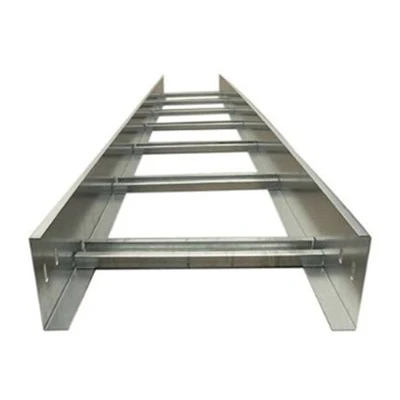
The short answer is yes—when selected, installed, and maintained correctly, aluminum cable trays are not just approved, they’re often the preferred choice for a wide range of industrial applications. But let’s dig into what that approval actually means, why it matters, and how we’ve helped factories, warehouses, and process plants make the switch without compromising safety.
First, it’s critical to define what industrial use entails here. Industrial environments aren’t your office break room. They operate 24/7 in conditions that range from freezing cold warehouse bays in the Midwest to high-heat chemical processing facilities in Texas, with exposure to dust, moisture, corrosive chemicals, and heavy mechanical loads. Cable trays in these spaces do more than just hold cables: they organize wiring to prevent tangles, protect cables from damage, and ensure electrical systems stay grounded and compliant with national safety standards.
Now, regulatory approval for cable management systems in the U.S. and Canada falls to two key bodies: the National Electrical Code (NEC) and Underwriters Laboratories (UL). When we at [Our Brand, no name], supply aluminum cable trays, every single one meets or exceeds NEC Article 390, which specifically outlines requirements for cable trays in industrial settings, and UL Standard 2024, the benchmark for cable tray performance. UL 2024 tests for impact resistance, load capacity, corrosion, and fire behavior—three non-negotiables for industrial spaces.
I still remember a client 8 years ago, a food processing plant in Ohio that originally installed steel cable trays. They called us three years in, saying their steel trays had started rusting along the welds near the steam sterilization line, where high humidity and cleaning chemicals ate away at the steel’s protective coating. Their maintenance team was spending $15,000 a year replacing corroded sections, and they’d had two minor electrical interruptions when rust debris damaged cable insulation. When we suggested aluminum trays, their engineering team pushed back immediately, citing a myth they’d heard: aluminum isn’t strong enough for heavy industrial loads.
That myth is one of the biggest misconceptions holding facilities back. Let’s talk strength. Aluminum has a tensile strength of around 40,000 psi for common 6061-T6 aluminum, the grade we use for most industrial trays. Compare that to hot-rolled steel, which lands at roughly 50,000 psi at its basic form. But here’s the catch for industrial applications: weight matters. A steel cable tray that can support 500 feet of 1,000 lbs of cable weighs 15 lbs per linear foot. The same aluminum tray that supports that exact same load? Only 3.5 lbs per linear foot. That cuts down on installation time (less heavy lifting for crews means faster projects and fewer on-the-job injuries) and reduces the load on building support structures—no need to reinforce ceiling mounts or wall brackets, which adds up to big savings on construction costs.
The Ohio food plant we worked with ran their own tests. They installed a 100-foot section of our aluminum tray next to a remaining steel section. After two years in the same harsh steam environment, the steel tray had 12% corrosion on its side rails, while the aluminum tray showed zero degradation. They replaced all their steel trays with ours a year later, and their annual maintenance costs dropped to $2,000—an 87% savings. That’s the kind of return on investment that makes industrial facilities sit up and take notice.
Another key approval factor for industrial use is fire resistance. Aluminum is non-combustible, meaning it won’t burn or contribute to flame spread, which is a huge plus for spaces with flammable materials like chemical plants, lumber yards, or refineries. When a fire does start, cable trays can act as a path for fire to spread if they’re made of combustible materials like plastic or even some coated steels. Aluminum trays won’t catch fire, and their thermal conductivity actually helps dissipate heat away from cables, reducing the risk of cable overheating and failure. NEC explicitly calls out non-combustible cable tray materials for hazardous industrial locations, and aluminum checks that box.
Corrosion is another big one—one that steel can’t always handle in harsh industrial settings. Aluminum forms a natural, protective oxide layer when exposed to air, which prevents further corrosion, unlike steel, which requires regular galvanizing or painting to resist rust. For facilities in coastal areas, or those that handle salt, acids, or alkaline cleaning agents, aluminum trays hold up far better than uncoated steel. We supply trays with extra-thick aluminum (0.125 inch instead of the standard 0.06 inch) for extreme corrosive environments, and those have a 25+ year lifespan with minimal upkeep. That’s a far cry from steel, which often needs replacement every 10 to 15 years in high-corrosion areas.
But approval isn’t just about material properties—it’s about how the trays are fabricated and installed. As a supplier, we don’t just cut aluminum to size and ship it. Every tray we produce is precision-folded with reinforced edges, bolted joints (instead of welded seams, which can create weak points and corrosion gaps), and includes grounding lugs as required by NEC. We also provide installation guides tailored to industrial use, including load capacity charts for different cable sizes, spacing requirements for wall mounts, and how to seal tray ends to prevent dust and moisture buildup.
That’s not to say aluminum cable trays are right for every industrial application. We always have a conversation with potential clients about use case: if a facility is in a highly explosive environment (like a refinery handling volatile hydrocarbons), we might recommend steel with a specialized explosion-proof coating, or a combination of materials. If a facility is working with extremely heavy cables (over 2,000 lbs per linear foot), we might pair aluminum trays with reinforced support brackets made of steel to handle the load. But for 70% of the industrial projects we work on—factories, warehouses, data centers, food and beverage plants, logistics hubs—aluminum is not just approved, it’s the optimal choice.
Let’s address another common question we get: what about electrical conductivity? Industrial cable systems need reliable grounding to prevent shocks, static buildup, and electrical interference. Aluminum is an excellent conductor, equal to steel for most grounding applications, and it’s easy to tap into trays for ground connections without special tools. We test every batch of trays to ensure electrical resistance meets UL standards, so facilities can be confident their grounding systems are compliant.
I’ve been in this business long enough to see trends shift. Ten years ago, most industrial engineers defaulted to steel for cable trays because that’s what they’d been taught. Today, more and more are specifying aluminum because of the cost savings, durability, and safety benefits. A recent report from the Industrial Maintenance and Repair Association (IMRA) found that facilities using aluminum cable trays reported 30% fewer unplanned cable outages, 40% lower annual maintenance costs, and a 25% faster return on initial investment compared to steel. That’s hard data that’s hard to ignore.
One project that stands out to me is a 500,000-square-foot e-commerce fulfillment center in Texas that opened in 2021. They needed to run power and data cables for 12,000 conveyor belts, plus lighting and security systems, across a 30-foot-high ceiling. Their initial bid included steel trays, but when they asked our team for a quote, we walked them through the weight difference. The steel bid would have required two additional structural beams to support the tray load, adding $80,000 to the construction cost. Our aluminum tray system fit within the existing ceiling structure, saving that $80,000—money they reallocated to upgrading their fire suppression system. They’ve since ordered additional trays for their second expansion, and the installation team told us they cut their cable run time by 20% because the trays were so much lighter to carry and position.
Of course, there are still hoops to jump through for certification. We work with clients to ensure our trays are listed by UL, meet NEC requirements, and are compatible with any other systems they have in place. We also provide all necessary documentation for inspections—something that’s non-negotiable for industrial facilities, which face strict safety audits from OSHA and local building codes. OSHA’s General Duty Clause requires employers to provide safe working environments, and using compliant cable trays is a key part of that, as faulty cable management is a leading cause of industrial fires and electrical incidents.
I don’t want to oversell aluminum, either. For some specialized industrial use cases, like very high-temperature environments (over 500 degrees Fahrenheit), aluminum can soften, so steel or stainless steel might be a better fit. But for the vast majority of industrial settings, aluminum is fully approved, durable, and cost-effective. The key is working with a supplier who knows the ins and outs of industrial standards, can tailor trays to your specific needs, and provides the support you need for installation and compliance.
If you’re an industrial facility manager, engineer, or contractor who’s been weighing your options for cable trays, let’s talk. We can walk you through your specific application, share data on load capacity and corrosion resistance, and help you calculate the long-term cost savings of switching to aluminum. Whether you’re renovating an existing facility or building a new one, we’ll ensure your cable tray system is not just approved, but optimized for safety and performance for years to come.

To learn more about our aluminum cable tray solutions, connect with our team to discuss your project needs.
Aluminum Profile Cable Tray References
National Electrical Code (NEC), Article 390: Cable Trays
Underwriters Laboratories (UL) Standard 2024: Cable Trays
Industrial Maintenance and Repair Association (IMRA) 2022 Annual Equipment and Infrastructure Report
Occupational Safety and Health Administration (OSHA) General Duty Clause (Section 5(a)(1))
Hebei Jinglang Industrial Co., Ltd.
As one of the most professional aluminum cable tray manufacturers and suppliers in China, we also support customized service. We warmly welcome you to wholesale high quality aluminum cable tray in stock here from our factory. If you have any enquiry about quotation, please feel free to email us.
Address: Nanxinzhuang Village, Daweihe Hui and Manchu Township, Wen’an County, Langfang City, Hebei Province
E-mail: wei32830@gmail.com
WebSite: https://www.jinglangcabletray.com/
