When I walk into a supermarket, the first thing that hits me isn’t just the bright lights or stacked shelves—it’s the low, constant hum of refrigeration units working behind the scenes, keeping every dairy product, fresh vegetable, frozen meal, and soda at the exact temperature it needs to be. As a supermarket refrigeration supplier who’s spent 12 years installing, maintaining, and tweaking these systems for stores ranging from small neighborhood markets to 80,000-square-foot big-box locations, I’ve seen firsthand just how much energy these units waste when they’re not set up right. A typical supermarket’s refrigeration system accounts for 40 to 50 percent of its total electricity use—this isn’t a small cost, and every bit saved goes straight to the bottom line, especially as utility rates keep climbing. Today, I’m pulling back the curtain on the energy-saving tips I’ve learned from working with hundreds of store owners, tips that are rooted in real-world data, not just industry jargon. Supermarket Refrigeration
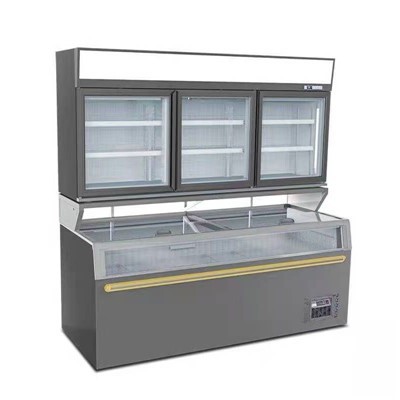
Let’s start with the basics that most stores overlook: the refrigeration doors. I can’t tell you how many times I’ve walked into a supermarket and seen the reach-in cooler doors propped open with a case of soda, or the sliding doors on a display cooler stuck partially ajar. Each time those doors stay open, warm, humid air rushes in, forcing the compressors to work overtime to cool the space back down. A study from the Air-Conditioning, Heating, and Refrigeration Institute (AHRI) found that a reach-in cooler with a door left open for just 10 minutes uses as much extra energy as running a 60-watt light bulb nonstop for 18 hours. That adds up fast—over a year, that’s thousands of extra kilowatt-hours (kWh) just from a moment of carelessness. Beyond reminding staff to close doors, there are upgrades that make a huge difference. I’ve installed energy-efficient door seals on older units, which are designed to replace worn, cracked gaskets that let in 15 to 20 percent more air than new ones. For stores with sliding glass doors, adding self-closing mechanisms is a no-brainer; I worked with a small chain in Ohio that cut refrigeration energy use by 8 percent after retrofitting 12 of their display coolers with self-closing doors last year. Another small tweak: adding door alarms that beep if a door is left open for more than 30 seconds. We set these up for a store in Indianapolis, and within three months, their door-related energy waste dropped by nearly half.
Next, let’s talk about temperature setpoints—this is where I see the most room for adjustment, and the most mistakes. Many store managers set their refrigeration temperatures way below what’s actually needed, either out of habit or a misbelief that colder food stays fresher longer. For fresh produce, the optimal temperature is 34 to 38 degrees Fahrenheit (F) in display units, and produce doesn’t need to be colder than that—colder temps can even damage delicate items like berries or lettuce, leading to more spoilage, which is a separate cost. For frozen food, the sweet spot is 0 to minus 5 degrees F, not the minus 10 or lower I’ve seen some stores set. For reach-in coolers holding dairy, deli, and pre-made meals, 36 to 38 degrees F is ideal. A 2022 report from the Food and Agriculture Organization (FAO) of the United Nations found that every 1 degree F you raise a refrigeration system’s setpoint above the optimal level reduces energy use by 2 to 3 percent. That’s not a minor number—if a store is currently running their frozen cases at minus 10 F and adjusts to 0 F, that’s a 10 to 15 percent cut in energy for that part of the system. I always work with store managers to test their products first before adjusting setpoints—we take temperature readings from multiple locations in the cooler or case over a 24-hour period, make sure the food stays safe, and then lock in the optimal temp. I recently did this for a large grocery chain in Texas, and they saved an estimated 120,000 kWh per year from adjusting just their frozen and deli cases.
Then there’s the issue of condenser coils—these are the workhorses of refrigeration systems, and they get dirty faster than you’d think. Condenser coils are located either inside the unit (for newer, hermetic systems) or outside on the roof (for larger systems), and their job is to release the heat pulled from the coolers into the air. When dust, dirt, grime, and even food debris build up on the coils, they can’t release heat efficiently, so the compressor has to run longer and harder to maintain the set temperature. I’ve seen coils so caked with grime that they looked like they’d never been cleaned, and those units used 30 to 40 percent more energy than they should. The fix is simple: regular coil cleaning, every three to six months depending on the store’s location. Stores in dusty areas (like near construction sites or farmland) need cleaning every three months, while those in cleaner suburban areas can go six months. We use mild, non-corrosive coil cleaners and soft brushes to avoid damaging the delicate fins on the coils—bending the fins blocks airflow, so we always straighten them out after cleaning too. A 2021 study from the American Society of Heating, Refrigerating and Air-Conditioning Engineers (ASHRAE) found that regular condenser coil cleaning can cut refrigeration energy use by 10 to 15 percent, and extend the life of compressors by up to two years. I had a client in Arizona whose roof-mounted coils were coated in desert dust; after a professional cleaning, their energy bill for refrigeration dropped by $1,200 in the first month alone.
Moving on to system maintenance, which I can’t stress enough—this isn’t just a “fix when it breaks” task, it’s a proactive way to save energy. The average supermarket refrigeration system has multiple components: compressors, evaporators, fans, refrigerant lines, and expansion valves, and each one needs regular check-ups. One of the most important parts is checking refrigerant levels. Too much or too little refrigerant makes the system work harder than it should. Low refrigerant is often a sign of a leak, which isn’t just bad for energy use—it’s also harmful to the environment, since many old refrigerants are ozone-depleting. I’ve found small leaks in units that were losing as much as 10 percent of their refrigerant every month; fixing those leaks and recharging the refrigerant to the manufacturer’s specs can improve efficiency by 5 to 10 percent. We also check evaporator fans—these fans circulate air inside the cooler or display case, and if they’re running at the wrong speed or have broken blades, they don’t move air evenly, leading to hot spots and uneven temperatures. Last year, I worked with a store in Chicago where three evaporator fans had bent blades, causing the system to run continuously even when the temperature was set correctly; replacing the blades and adjusting fan speed cut their compressor run time by 22 percent. Another often-overlooked task is defrost cycles. For frozen cases, frost builds up on the evaporator coils over time, and defrost cycles melt that frost. But if defrost cycles are set too often or run too long, they waste energy—especially if they run during peak hours when the store is busy. I always adjust defrost cycles to run during off-peak times, like between 2 a.m. and 6 a.m., when the store is closed or has very few customers. I also use demand defrost controls, which only activate the defrost cycle when a certain amount of frost has built up, instead of running on a fixed timer. A supermarket in Florida switched to demand defrost last year, and their defrost-related energy use dropped by 28 percent—no small saving in a state where utility rates are among the highest in the country.
Upgrading to energy-efficient equipment is another big step, and it’s not just for new stores. If you have an older refrigeration system (15 years or more), it’s probably using outdated technology that uses twice as much energy as new models. The biggest upgrade I recommend is moving to variable-speed compressors. Unlike traditional single-speed compressors that turn on and off at full power, variable-speed compressors adjust their speed based on the cooling load—so if the store is slow and less refrigeration is needed, the compressor runs slower, using less energy. A 2023 report from the U.S. Department of Energy (DOE) found that variable-speed compressors can reduce refrigeration energy use by 20 to 30 percent compared to old single-speed models. For stores that aren’t ready to replace their entire system, there are smaller upgrades too: LED lighting inside display cases. Older cases use incandescent or fluorescent lights that give off a lot of heat, which the refrigeration system has to work extra hard to counteract. Switching to LED lights cuts that heat load by up to 70 percent, which translates to energy savings of 5 to 10 percent for the refrigeration system. I worked with a regional chain in Minnesota that switched to LED lights in 50 display cases, and their refrigeration energy use dropped by 7 percent within six months—on top of the savings from lower lighting bills. Another upgrade is installing cooler doors with high-insulation panels, which keep warm air out better than older, thinner doors. We installed these on a small market in Maine last year, and they cut the heat gain into the coolers by 18 percent.
There’s also the layout of the store, which I see store managers underestimate all the time. Where you place refrigeration units matters a lot for their efficiency. If a display case is placed right next to a loading dock door that opens and closes frequently, or next to a heat-generating appliance like a bakery oven or a grill, it has to work harder to cool the area around it. I always advise stores to place display coolers in areas away from heat sources, and to leave at least 18 inches of space around the condenser units (whether they’re on the roof or at ground level) for airflow. If condenser units are blocked by stacked pallets, overgrown bushes, or other equipment, they can’t release heat properly, which lowers their efficiency by 10 to 15 percent. A big-box store in Atlanta had their roof-mounted condensers blocked by a stack of storage boxes from a recent inventory; when we moved the boxes and cleared the space, their refrigeration energy use dropped by 9 percent in the next billing cycle. Also, don’t overstock the coolers or display cases. When you pack shelves too tight, air can’t circulate freely around the products, leading to hot spots—so you have to run the compressor longer to keep everything cold. I’ve seen stores overstock deli cases so much that the air can’t reach the back shelf, leading to small warm spots that make the entire case run more. Keeping shelves 80 percent full (leaving room for air flow) is the sweet spot.
Wait, I should mention something about staff training too—because even the best system won’t save energy if staff don’t know how to use it properly. I’ve been to stores where staff open coolers for long periods to find one item, or leave cases open to restock instead of closing and opening again, all adding up to wasted energy. I always help stores create a simple training session for frontline staff, going over the basics: closing doors immediately after use, not overstuffing cases, reporting when a door is stuck or a seal is worn, and avoiding leaving coolers open for extended restocking. One store in Denver did a 30-minute training with their overnight staff, and within two months, their door-related energy waste dropped by 12 percent. It’s not about blaming staff—it’s about giving them the tools and knowledge to help, since they’re the ones interacting with the units every day.
I also want to talk about monitoring and data, because you can’t save energy if you don’t measure what’s being used. I recommend installing a smart monitoring system that tracks refrigeration energy use, temperatures, and compressor run times in real time. These systems send alerts if a door is left open, if temperatures drop too low, if refrigerant levels are off, or if a compressor is running abnormally. A store in California installed one of these systems last year, and the alerts helped them catch a faulty fan motor that was causing the compressor to run nonstop—without the alert, they would have waited for a monthly maintenance check, wasting an extra $800 in energy costs. The data from these systems also lets you spot patterns: like if energy use spikes on hot, humid days, or if defrost cycles are running at the wrong time, so you can adjust settings to match the store’s specific needs.
Let me be clear: none of these tips are one-size-fits-all. A small neighborhood market with four reach-in coolers has different needs than a 100,000-square-foot supercenter with 20 display cases and roof-mounted condensers. That’s why I don’t just give generic advice—when I work with a new client, I do a full energy audit of their refrigeration system, walking every inch of the store, checking temperatures, running the units, looking at their utility bills, and talking to their staff. Last year, I worked with a store in Michigan that thought their high energy costs were from old compressors, but during the audit, we found that their door seals were all cracked and they were running their frozen cases at minus 12 degrees F instead of the optimal 0 F. By fixing the seals and adjusting the setpoint, they saved $1,500 a year without replacing any major equipment. It’s the small, consistent changes that add up, not always big, expensive upgrades.
If you’re a supermarket owner or operations manager reading this, I know energy costs are squeezing your margins, and every dollar saved on refrigeration is a dollar that can go to paying staff, stocking fresh products, or keeping your store running smoothly. I’ve spent years helping stores implement these tips, and I’ve seen clients cut their refrigeration energy use by anywhere from 10 to 35 percent, depending on their current system and practices. If you’re ready to take a look at your own refrigeration system, we can schedule an audit to identify exactly where you’re wasting energy and tailor a plan that works for your store. There’s no one-size-fits-all solution, and no pressure for big, immediate changes—sometimes even a single door seal replacement or temperature adjustment can make a noticeable difference. Feel free to reach out to discuss your needs, and let’s work together to make your refrigeration system more efficient and affordable.
Refrigerated Display Case References
Air-Conditioning, Heating, and Refrigeration Institute (AHRI). 2020. "Commercial Refrigeration Door Efficiency Best Practices."
American Society of Heating, Refrigerating and Air-Conditioning Engineers (ASHRAE). 2021. "Guideline for Refrigeration System Maintenance and Efficiency."
U.S. Department of Energy (DOE). 2023. "Energy Savings Potential of Variable-Speed Compressors in Commercial Refrigeration."
Food and Agriculture Organization (FAO) of the United Nations. 2022. "Food Loss Prevention Through Optimal Refrigeration Temperatures in Retail Settings."
Jinhua Kate Refrigeration Equipment Co., Ltd.
We are one of the most professional supermarket refrigeration manufacturers in China, also support customized service with low price. Please rest assured to wholesale bulk high quality supermarket refrigeration for sale here from our factory. If you have any enquiry about quotation, please feel free to email us.
Address: Room 101, No. 21, Southwest Sixth Road, Xin’an Village, Xin’an Community, Duohu Subdistrict, Jindong District, Jinhua City, Zhejiang Province
E-mail: 2528940364@qq.com
WebSite: https://www.katekool.com/
