Hey guys, if you’ve ever been at a workshop, equipment bay, or job site and stared at a stack of industrial hoses thinking, “Wait, can I just grab this random one to hook up my compressed air line?”—you’re not alone. As someone who’s been in the industrial hoses game for almost a decade, talking to contractors, maintenance techs, and even small business owners who’ve messed up picking the wrong hose, let’s cut through the noise and answer that burning question: Can I use an industrial hose for compressed air? Industrial Hoses

First, let’s get one thing straight: “industrial hose” is a huge umbrella term. It covers everything from heavy-duty water hoses for mining to chemical transfer hoses that can’t take pressure at all—so you can’t just point to any hose and say, “Yeah, that’s industrial, it works for air.” But if you’re scrolling through our inventory looking to grab something that’ll actually hold up to compressed air, there are specific industrial hoses that do work, and a lot that don’t. Let’s break this down like we would over a coffee at our warehouse (no stuffy jargon, promise).
First, let’s talk about what compressed air actually puts a hose through. Compressed air isn’t just… air. It’s under pressure—usually between 90 to 120 PSI for most shop tools, but some industrial stuff can hit 200 PSI or more. Then there’s the constant flexing, especially if you’re dragging a hose around a job site all day, plus maybe some ambient heat, and condensation in the air line that can cause corrosion over time. A hose that works for moving garden water isn’t built for any of that.
So what makes an industrial hose good for compressed air? First, pressure rating. Any hose you use for compressed air needs a burst rating way higher than your working pressure. The general rule of thumb is burst pressure should be at least 4x your max working pressure. For example, if you’re running 120 PSI air tools, you need a hose with a working pressure of at least 120 PSI, and a burst pressure of 480 PSI minimum. A lot of cheap “industrial” hoses from big box stores only list a 2:1 pressure ratio, which is a recipe for a blowout when you’re working hard.
Next, material. This is where a lot of people mess up. The best industrial hoses for compressed air are usually either rubber or thermoplastic, not vinyl. Vinyl hoses are super cheap and light, but they break down fast in sunlight, kink easily, and can’t handle high pressure. Rubber is durable, flexible, and great for cold weather, but keep an eye on the inner liner—if it’s natural rubber, some compressed air additives can cause it to swell over time. Thermoplastic hoses (like polyurethane or nylon) are a happy middle: they’re light, kink-resistant, and hold up to most shop air conditions. We sell a ton of our polyurethane industrial compressed air hoses for that exact reason—contractors love how easy they are to drag around without fighting kinks all day.
Wait, but what about the hoses that are definitely NOT good for compressed air? Let’s list the ones we see people reach for all the time that are red flags. First, any hose labeled “water only” or “general purpose.” We’ve had customers come back to us with hoses that burst within a week because they used a standard garden hose for their air tools—those are built for 50 PSI max, tops. Then there’s suction hoses, like the ones you use for draining water. Suction hoses are rated for negative pressure, not positive pressure, so if you hook them up to an air compressor, they’ll collapse on themselves faster than you can say “oops.” And don’t even get us started on fuel hoses—they’re built for gasoline or diesel, not air, and can disintegrate completely when under pressure.
Now, let’s talk about common mistakes we see that make even a “good” industrial hose fail. First, not matching the hose size to your setup. If you have a compressor with a big air output, a 3/8-inch hose will restrict airflow way more than a 1/2-inch hose, so your tools won’t work as well. But if you’re just running small nail guns, a 1/4-inch hose is overkill. Second, not checking for damage before every use. Even a high-quality industrial hose can get a nick from a tool, or abrasion on the job site, which weakens it. We always tell customers to do a quick run-through: check for cuts, bulges, or stiff spots, because those are signs the hose is about to blow. Third, using the wrong fittings. A hose is only as good as the connections. If you’re using cheap plastic fittings that strip, that can cause leaks, and sometimes even make the hose come loose under pressure. We recommend using brass or steel fittings for any compressed air setup—they cost a little more, but they last way longer and are way safer.
Wait, there’s one more big thing people don’t talk about: air quality. If you’re using compressed air for anything that touches food, or for sandblasting, or even for breathing air (like in a paint booth), you need a specific industrial hose that’s rated for food-grade or breathable air. Regular industrial hoses can have additives in the material or metal parts that flake off into the air, which is a big safety hazard. We keep a whole line of FDA-compliant compressed air hoses for exactly that—our customers in the food and beverage industry swear by them.
Let’s do a quick real example from last month. A customer named Mike, a small contractor who does residential remodeling, came to us panicking because his brand-new “industrial” air hose burst on a ladder mid-job, got air all over his power tools, and almost knocked him off. He’d grabbed a general-purpose rubber hose from a big box store that was labeled “industrial” but only had a 200 PSI working pressure, and he was running 150 PSI air for his framing nailer. That’s way too low—should have been at least a 300 PSI working pressure, with a burst rating of 1200 PSI. We sent him one of our heavy-duty rubber compressed air hoses, gave him a quick run-through on checking fittings, and he texted us a week later saying it’s been running perfect for every job. That’s the stuff we deal with every day—avoiding that kind of headache.
Now, let’s make this actionable. If you’re trying to figure out if your current industrial hose works for compressed air, here’s your quick checklist:
- What’s the max working pressure of the hose? It needs to match or exceed your compressor’s output (usually 90-150 PSI, but check your compressor’s label).
- What’s the burst pressure? It should be at least 4x the working pressure. If it’s less than that, swap it.
- What’s it made of? No vinyl, no suction hoses, no fuel hoses. Rubber or thermoplastic is best.
- Do you need it for anything special? Food-grade, breathing air, or high-heat applications? You need a specific rated hose for that.
- Any damage? Check for cuts, bulges, or stiff areas before every use.
If you’re still not sure, don’t guess. That’s the worst thing you can do. We’ve had way too many people come to us with ruined tools, downtime, or even safety issues because they tried to save a few bucks and grab the wrong hose.
Here’s the thing: when it comes to compressed air, cutting corners on hoses is never worth it. A good industrial compressed air hose will last years, hold up to the job site, and keep your tools running smoothly. A bad one? You’re looking at downtime, costly repairs, and even safety risks.
If you’re shopping for a new hose, don’t waste time scrolling through random listings. Reach out to us, tell us what you need—how much air pressure you’re running, what tools you’re using, if you have any special requirements like food grade or heavy duty for cold weather—and we’ll hook you up with exactly what works. No up-selling, no confusing jargon, just straight talk and the right hose for your job.
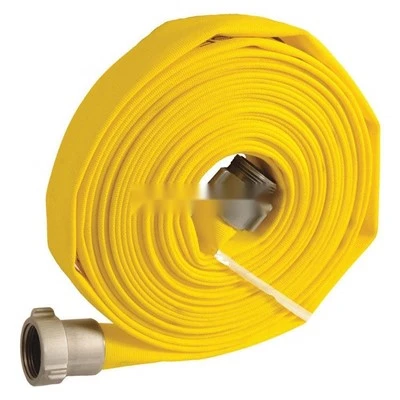
At the end of the day, the answer to “Can I use an industrial hose for compressed air?” is: only if it’s the right type of industrial hose. There’s no one-size-fits-all, but with a little know-how, you’ll pick the right one every time. Stop stressing about blowouts, stop wasting money on hoses that don’t work, and get something that’s built to last.
Jacketed Fire Hoses References:
- Compressed Air and Gas Institute. (2020). Selection and Care of Compressed Air Hoses. CAGI Technical Bulletin 103.
- National Fire Protection Association. (2021). Standard for Compressed Gas Systems and Piping. NFPA 55.
- Hose Manufacturers Association. (2019). Industrial Hose Pressure Rating Guidelines. HMA Technical Report 7-19.
Taizhou Qituo Fire Fighting Equipment Co., Ltd.
As one of the most professional industrial hoses manufacturers and suppliers in China, we also support customized service. We warmly welcome you to wholesale bulk advanced industrial hoses made in China here from our factory. If you have any enquiry about quotation, please feel free to email us.
Address: Room 401, Unit 1, Building 4, Jinhua Garden, Sanshui Avenue, Tianmushan Subdistrict, Jiangyan District, Taizhou City, Jiangsu Province
E-mail: sales@qtfire.com
WebSite: https://www.qtfire.com/
