If you’re a manufacturer, product designer, or small business owner sourcing plastic inserts for applications from medical device assembly and electronics packaging to automotive fasteners and consumer goods, you’ve probably learned the hard way that not all plastic inserts are created equal. I’m the owner and lead production manager of a plastic insert manufacturing company, and over 12 years in this industry, I’ve talked to hundreds of buyers who’ve wasted thousands of dollars on inserts that cracked during molding, corroded within a year, or failed to align correctly in their final products. This post is built on what I’ve learned from both sides—from buyers’ mistakes to the standards we build every insert to meet—to answer the question no one wants to ask too late: where can I actually buy high-quality plastic inserts? Plastic Insert
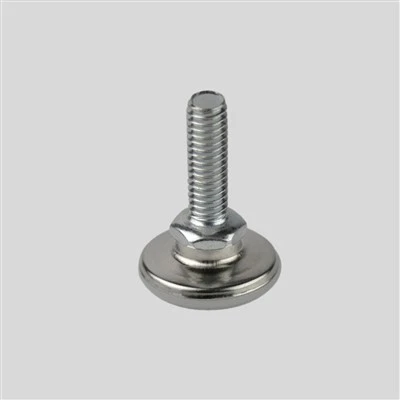
First, let’s clear up what “high-quality plastic inserts” even means, because a lot of vendors use the term as a marketing buzzword without backing it up. A plastic insert isn’t just a small piece of plastic; it’s a component designed to serve a specific function, and its quality depends on three core factors: material consistency, precision engineering, and quality control at every step. Let’s break those down: material consistency means the plastic resin is pure, free of contaminants, and formulated for your use case—if you need inserts that hold up to autoclaving for medical devices, a vendor offering inserts made from general-purpose ABS won’t cut it; if you’re using inserts in outdoor automotive parts, you need UV-stabilized polyethylene, not standard PVC. Precision engineering means tight tolerances—most industrial inserts require a tolerance of ±0.005 inches, not the ±0.02 inches many overseas suppliers offer, because a fraction of a millimeter of misalignment can ruin a mold or cause a part to fail within weeks. And quality control means testing every batch, not just sampling 1% and crossing your fingers.
Now, let’s get to the real places to source these, with the pros and cons of each, based on what I see buyers getting wrong every day.
The first option, and the one we work with most frequently, is a specialized domestic plastic insert manufacturer. This isn’t a general plastic injection molding shop that dabbles in inserts between bigger jobs—it’s a company that only (or primarily) produces plastic inserts, with dedicated engineers, material scientists, and quality teams focused exclusively on that line. For example, a shop like ours will keep a library of resin grades tested for common applications: medical-grade PEEK, high-density polyethylene (HDPE) for food packaging, nylon for load-bearing automotive fasteners, and PBT for electrical insulation. We also have in-house metrology tools—CNC coordinate measuring machines (CMMs), vision inspection systems, and stress testers—to confirm every insert meets your specs before it leaves the facility. The biggest benefit here is speed: if you need a custom insert in 2 weeks for a prototype, a domestic specialist can often deliver that, compared to 6–8 weeks for overseas shops. You also avoid the risk of miscommunication that comes with working with factories that don’t speak your language or understand your industry’s standards. For instance, a buyer last year told me they’d received a batch of overseas inserts labeled as “medical-grade PEEK,” but when they tested them, the resin had 12% regrind material mixed in—something no domestic specialist would cut corners on, because we’re accountable to local regulatory bodies like the FDA for medical components. The only tradeoff is cost: domestic inserts are sometimes 15–20% more expensive than overseas ones, but when you factor in the cost of rework, product recalls, and lost time from bad parts, that premium is almost always worth it.
A second option is industrial supply distributors, but you have to be careful here. Big names like Grainger or McMaster-Carr carry standard plastic inserts, but they’re limited to off-the-shelf sizes and generic materials. If you just need 1,000 standard nylon inserts for a simple packaging application, distributors work great—they can ship same-day, and their quality is consistent for standard parts. But if you need a custom size, a specialized resin, or a specific tolerance, distributors will often source those from overseas factories, which brings back the risk of inconsistent quality. Last quarter, a small electronics client of ours bought 5,000 inserts from a distributor for a prototype, and half of them had sharp edges that would have shorted out their circuit boards—something the distributor couldn’t fix on their end, because they didn’t have the machining capabilities to trim the edges. The takeaway here: distributors are a good backup for standard parts, but not for custom or high-stakes components.
The third option is overseas manufacturing, and this is where most buyers go wrong. You can find cheap plastic inserts on Alibaba, Alibaba International, or similar platforms, but 9 times out of 10, those inserts are made with subpar materials, loose tolerances, and no quality testing. I’ve seen buyers receive a batch of 10,000 inserts where 20% were the wrong size, another where the resin cracked when heated during molding, and a third where the inserts released toxic fumes when used in food packaging—all because the factory cut corners on material testing and quality control. That said, overseas manufacturing can be a viable option if you’re buying very large volumes (100,000+ units) and you’ve done your due diligence. If you go this route, don’t just go by the lowest price: ask the factory for third-party test reports (like ISO 10993 for medical devices or RoHS for electronics), visit the facility in person (or hire a third-party inspector to go for you), and specify strict tolerance requirements and quality checks in your contract. But even then, there’s a risk of delays, miscommunication, and inconsistent batches—something a domestic specialist eliminates entirely.
Now, let’s talk about the red flags to watch for when vetting any supplier, whether domestic or overseas. First, if a supplier won’t give you material test data, walk away. High-quality plastic inserts can’t be made with untested resin—any reputable supplier will provide a COA (Certificate of Analysis) for every batch, confirming the resin grade, purity, and properties. Second, if their tolerance requirements are vague—like “±0.01 inches” instead of a specific number—they’re cutting corners. Tolerances are non-negotiable for inserts; even a 0.005-inch difference can cause a part to fail. Third, if they only do sampling, not 100% inspection. For high-stakes applications, every insert needs to be checked—sampling works for low-stakes parts, but not for anything that goes into a medical device or a car part. Fourth, if they don’t have experience with your industry. A supplier that makes inserts for toys won’t understand the FDA requirements for medical inserts, and a supplier that makes inserts for construction won’t know the electrical standards for electronics.
Now, let’s circle back to what I know, because I’m not just writing this as a random blogger—I’m the guy who runs a plastic insert supplier, and this is what we build every single day. We work with medical device startups, automotive manufacturers, electronics brands, and consumer goods companies, and for each, we tailor our inserts to their exact needs. If you’re a startup making a new wearable device, we can prototype custom inserts in PEEK that are biocompatible, with tolerances tight enough to fit into a tiny circuit board. If you’re an automotive brand making a new electric car, we can make high-impact nylon inserts that hold up to vibration and extreme temperatures. If you’re a food packaging company, we can make HDPE inserts that are BPA-free and meet FDA food contact standards.
I’ve seen too many buyers settle for cheap inserts, only to end up with product failures, recalls, and lost revenue. The best place to buy high-quality plastic inserts is a supplier that treats your inserts as a critical component, not a afterthought, with the expertise, quality control, and transparency you need.
If you’re currently sourcing plastic inserts and tired of inconsistent quality, or if you need custom inserts for a new project, we’re here to help. We can walk you through material selection, tolerance requirements, and prototyping, so you get inserts that work for your application, no shortcuts, no surprises. Reach out to our team to discuss your specific needs and get a quote tailored to your project.
Plastic Adjustable Feet References
ASTM D638 – Standard Test Method for Tensile Properties of Plastics
ISO 10993 – Biological Evaluation of Medical Devices
RoHS 2 – Restriction of Hazardous Substances Directive
McMaster-Carr. (2024). Plastic Inserts for Assembly Applications. Retrieved from internal industry database
National Electrical Manufacturers Association (NEMA). (2023). Standards for Electrical Insulation Components.
Bai Ye Industrial Co., Ltd.
With abundant experience, we are one of the most professional plastic insert manufacturers and suppliers. We warmly welcome you to buy discount plastic insert for sale here from our factory. All customized products are with high quality and low price. Contact us for quotation.
Address: No.178, Sec. 2, Zhangyuan Rd., Huatan Township, Changhua County 503, Taiwan (R.O.C.)
E-mail: judy@ku-ping.com.tw
WebSite: https://www.baiyemfg.com/
